Showing posts with label organize. Show all posts

Wednesday, May 11, 2011

10 Ways to Focus with a Whiteboard


Blackboards were the communication tool my teachers used in my elementary school. They could have been black, or green, or even brown, but we used chalk to write on them.

Then came the fabled whiteboard. We have them in our conference rooms and I have a small one in my office.

Besides doodling, they do have another purpose. Check out this guest post:

10 Things to Write on Your Whiteboard

Recently I had visited a client who was struggling with his productivity. His practice was running smoothly but at times would occasionally slow up, for no apparent reason. The first thing I questioned was the methods he was putting into his workday. Quickly, I discovered everything seemed to be in ordered. So what is the problem? Can a 2:30 feeling last all week?

Discussing this, I found that bringing yourself back to basics could help out in a large way. Pretend that your business is a new venture again, and remember the excitement you felt with each new goal met. An often underrated and overlooked approach is “The Whiteboard.” Here is a list of ten motivational strategies to utilizing your whiteboard.


1 Divide your whiteboard in half, one side long-term and one side short-term goals.

  • These two halves should coincide with each other. As progress is made short term, let it translate at some point onto your long-term side. This obviously depends on what kind of turnover ratios you’re working with.


2 Provide action steps.

  • Action steps are key to understanding the task at hand. It is crucial when completing action steps to cross them out. At the same time it is crucial not to erase them until the ultimate goal is accomplished. Seeing progress, or the “light and the end of the tunnel,” can go a long way as a motivational tool.


3 Create a target number

  • This is the simplest, yet maybe the most important thing you can do. Your target number can be any number, for instance a sales goal, or even a spending limit, and it is important to update this number daily accordingly.


4 Upcoming events.

  • This is a great tool to keep a keen mind on what needs to be done. Looking ahead helps to keep you from getting behind, and also provides better communication with clients or associates. When everyone is on the same page, it’s easier to stay on task.


5 Make note of successful sales.

  • Highlighting a good thing can motivate employees to be at their best and can turn selling or accomplishments into an ongoing competition. I find that it is best to use the color green or blue when making these notes, and provide the name of the successful employee. Make sure these do not stay up to too long to keep the employees wanting more.


6 Make note of a deficit or a complication.

  • Highlighting a problem, or a goal that was not completely met can prove to be quite motivational as well. This should be made note of in red ink to relay the message that the issue needs to be taken care of. DO NOT include employee names and their mishaps. Doing so will only create turmoil and stress. Instead offer the opportunity to let it be known who was the one to correct the problem. These issues should remain on the board until the problem is fixed.


7 Prioritize your clients.

  • Every one of your clients should be a priority, but lets face it, some are simply worth more to the business than others. Make sure your top clients are taken care of first.


8 Prioritize your debt.

  • This is true with your accounts payable as well. Take care of the debts you absolutely need to pay first and don’t ever forget your payroll. Your employees will like to know that they are a priority. Also keep in mind some clients may offer cash back or a discount for payment within an agreed period of time.


9 List of your competitors that are outperforming you.

  • Let this be a big part of your whiteboard. Competing with rivals is always invigorating, and can lead to a boost in morale amongst your colleagues.


10 Draw a Dinosaur

  • Dinosaur, picture, joke of the day, employee’s birthday, or anything else that might draw a smile in the workplace. Little things like that can shrug of some of the stress the week may provide.


Now obviously you won’t be able to fit everything at once, but every whiteboard and business is different. Try out some of the ideas, and see what works best for you.

Sunday, November 21, 2010

I was going to post this earlier...

But... well, you know.

from the DLM Blog:

6 Useful Steps To Tackle Procrastination

Posted: 09 Nov 2010 07:19 AM PST


Is there something you're procrastinating in your life now? For example,
  • Finishing your work
  • Getting a new job you're passionate about
  • Looking for your soul mate
  • Losing weight
  • Starting a business
Procrastination is one of the biggest time wasters in life. When we procrastinate, we waste away valuable free time and put off important tasks we should be doing until it’s too late. When that happens, we panic and wish we started earlier. I know a few chronic procrastinators, and unfortunately they spend their lives in the cycle of delaying, putting off important tasks, procrastinating, avoiding work, and doing work only when it's inevitable. It's unfortunate because they are disgruntled with their lives and they often self-victimize about their situations, when they have put themselves there in the first place.

It doesn't have to be that way at all. You can take conscious action over procrastination to create the life that you want. Here, I will share 6 useful steps to tackle the procrastination bug:
  1. Set goals that you want
    If you're not springing into action, there is probably a lack of desire towards the goal. Rather than push yourself through with the process, let's start off with the very basic. Do you want this goal? If your answer is "no", that means this isn't a goal to pursue in the first place. If that's the case, pressing on isn't a solution. Ditch those goals, get back to the drawing board and start forming new goals. Identify the goals that really inspire you.

  2. Understand why you want the goal
    Understanding why you want the goal will help you get clear of your inner motivations. Whether your goal is weight loss, to change a job, to find your life partner, ask yourself: Why do you want this goal? Write down as many answers as possible, until you feel a strong drive and motivation. The objective is to connect you with your inner desire for the goal. This 'Why' is the fuel that'll drive you towards your goal. If you don't have a good 'Why', you'll eventually face a lack of interest and give up halfway. With a strong 'Why', it'll drive you to accomplish anything you want to, and overcome whatever is ahead.

  3. Develop a clear plan with specific deadlines
    A clear plan with specific deadlines is crucial. If you don't have that, you won't know the effects day-to-day procrastination has your end outcome. In your mind, there is a foggy idea of what you need to do and when you need to do it. Since there isn’t a clear idea of what needs to be done by when, your impression is that even if you procrastinate for a little while, nothing gets impacted. So you let yourself relax, thinking you can get to it later on.

    However, every time you procrastinate, something is implicated. You just don’t know because you don’t have a clear plan outlined. Develop a plan to achieve your goal. Your plan should include the steps you need to take and specific deadlines for each task. This way, you know you have to finish each task by a certain date.

  4. Break your work into little steps
    I remember when I was working on my 1st ebook, The Personal Excellence Book, a few months ago, I would procrastinate on it day after day. It would be months before I realized that I was never ever going to get to it unless I did something different. I realized I was putting it off because I saw it as a huge task and it was mentally overwhelming. So then, I broke down the project into phases such as researching, deciding on the topic, creating the outline, drafting the content, writing the chapters, and so on. Suddenly, the whole thing seemed very manageable. From there, I just focused on the immediate phase and get it done to my best ability, without thinking about the other phases. When it's done, I moved on to the next. My ebook was launched just a few months ago with pre-sales being maxed out in the first couple of hours.

    Part of the reason why we procrastinate is because subconsciously, we find the work too overwhelming for us. Break it down into little parts, then focus on one part at the time. It'll be so simple that it's easy to start!

  5. Drop the perfectionist mindset
    As contradicting as it may be, a perfectionist mindset leads to procrastination. Have you ever thought put off your work because you feel like it's too much work? That's the perfectionist side of you thinking - in your mind, you see the work to be done in a certain way, to a certain level. However, if you think about it, that sort of mindset doesn't serve you. For what it's worth, doing just a wee bit of something is better than not doing at all. Just start off small. Even if it's a lousy draft, it gets things started. It's from that 1st draft that you build on to the next draft.

    When I write my articles, I always split the work over several days. My objective when I first write it is not to get everything right, but just to get the key ideas down and have a brief outline. It doesn't even have to look a certain way - editing comes in the later stages. I find that this system of writing makes me a lot more productive than trying to finish 1 whole blog post in 1 sitting.

  6. Create accountability
    The more accountable you are to your goal, the more better. Tell all your friends, colleagues, acquaintances and family about your projects. Now whenever you see them, they are bound to ask you about your status on those projects. This creates an even stronger motivation to stick to your plans and achieve your goals. For example, sometimes I announce my projects on The Personal Excellence Blog, Twitter and Facebook, and my readers will ask me about them on an ongoing basis. It's a great way to keep myself accountable to my plans.
Share your experiences
Is there something you're procrastinating in life? How can you tackle your procrastination via the 6 steps above? Please share with all of us in the comments area.

Written on 11/09/2010 by Celestine Chua. Celestine writes at The Personal Excellence Blog, where she shares her best advice on how to achieve personal excellence and live your best life. Get her RSS feed directly and add her on Twitter @celestinechua.
Photo Credit: SuperFantastic

Monday, August 02, 2010

The New World Order


This used to be a term used for a conspiracy theory leading to a unified, one world government.

However I'm applying it to a new way of doing things that didn't exist in my parents lifetime.

Seth Godin posted this on his blog:

A post-industrial A to Z digital battledore

New times demand new words, because the old words don't help us see the world differently.

Along the way, I've invented a few, and it occurs to me that sometimes I use them as if you know what I'm talking about. Here, with plenty of links, are 26 of my favorite neologisms (the longest post of the year, probably):

A is for Artist: An artist is someone who brings humanity to a problem, who changes someone else for the better, who does work that can't be written down in a manual. Art is not about oil painting, it's about bringing creativity and insight to work, instead of choosing to be a compliant cog. (from Linchpin).

B is for Bootstrapper: A bootstrapper is someone who starts a business with no money and funds growth through growth. The internet has made bootstrapping much easier than ever, because the costs of creating and marketing remarkable things are cheaper than ever. It's really important not to act like you're well-funded if you're intent on bootstrapping (and vice versa). You can read the Bootstrapper's Bible for free.

C is for Choice: I didn't coin the term the Long Tail, but I wish I had. It describes a simple law: given the choice, people will take the choice. That means that digital commerce enables niches. Aggregating and enabling the long tail accounts for the success of eBay, iTunes, Amazon, Craigslist, Google and even match.com.

D is for Darwin: Things evolve. But evolution is speeding up (and yes, evolving). While it used to take a hundred thousand years for significant changes to happen to our physical culture, the nature of information and a connected society means that 'everything' might change in just a few months. Ideas that spread, win and organizations that learn from their mistakes lead the rest of us. (from Survival is Not Enough)

E is for Edgecraft: Brainstorming doesn't work so well, because most people are bad at it. They're bad at it because their lizard brain takes over moments before a big idea is uttered. "Oh no!" it says, "I better not say that because if I do, then I'll have to do it." And so brainstorming quickly becomes clever stalling and timewasting. Far better is to practice edgegraft. Someone announces a direction ("we'll be really convenient, we'll offer our menu by fax,") and then the next person goes closer to that edge, topping it, ("we'll offer it by email!") and so on, each topping the other in any particular direction. (from the book Free Prize Inside)

F is for the Free Prize: People often don't buy the obvious or measured solution to their problem, they buy the extra, the bonus, the feeling and the story. The free prize is the layout of Google--the search results are the same, but the way the search feels is why you choose to search there. If engineers thought more about the free prize, we'd need fewer marketers.

G is for Go go go™: I just trademarked this one, but you have my permission to use it all you like. Go go go is the mantra of someone who has committed to defeating their anxiety and ignoring their lizard brain. Not a good strategy for airline pilots, but for the rest of us, a little Go go go might be just the ticket.

H is for broken: Isn't it just like a marketer to compromise when he should have organized better in the first place? There's a lot in our consumer society that's broken, but try to avoid getting obsessed with it. Far better to ship your own stuff that's not broken instead.

I is for Ideavirus: A decade ago a wrote a book that was free. It still is. It argues that ideas that spread win, and you can architect and arrange and manipulate your ideas to make them more likely to spread. Note that I'm not saying you can add gimmicks and spam and networking to spread your idea. I'm saying the idea itself is more or less likely to spread based on how you design it.

J is for just looking: When there's plenty of choice and everything is a click away, I'm very unlikely to take action, certainly unlikely to actually buy something from you. I'll do it tomorrow. Or the day after. Which means the only way you create action is to produce an emergency. Why now? Why not later...

K is for kindle: No, not the ebook reader. Kindle as in patiently starting a fire. The TV era demanded blockbuster launches of blockbuster products aimed at the masses. The internet responds better to bonfires that are kindled over time, to ideas that spread because the idea itself is the engine, not the hype or the promotion. First, ten.

L is for Lizard Brain: This is a huge impediment to getting what you want, finding your calling and satisfying your customers. The lizard brain is near your brain stem, including your amygdala. It's the part of your brain responsible for anger, revenge, fear, anxiety and reproduction. It's the original brain, the one that wild animals possess. Steve Pressfield has named the voice of the lizard: it's the resistance. The resistance rationalizes, hides and sabotages your best work.

M is for Meatball Sundae: This is the unfortunate combination of traditional products and services (designed for low price and good quality) with the high-growth nature of the idea-driven internet. When your boss tells you to build a viral campaign about some lame product gathering dust in the warehouse, she's asking you to build a meatball sundae and you should flee.

N is for NOBS: Otherwise known as the new order business school. My rant about this points out that for most people, a traditional MBA is a waste of both time and money. The two biggest benefits--the selection process of getting in, and the social process of networking--could be accomplished, in a Swiftian fashion, without any classes at all.

O is for Orangutan: I could have used the word 'monkey', but I already had an M listing, plus I love the way you spell Orangutan. Anyway, the primate is the best way to think about how people interact with websites. They're like monkeys in a psychology experiment, looking for the banana. Where's the banana, they ask? Of course, I don't know the monkey word for banana, so I'm paraphrasing. If your website offers a banana, people are going to click on it. If they don't, they'll leave. My argument for banana design is in The Big Red Fez.

P is for Permission: Anticipated, personal and relevant messages will always outperform spam. Obvious, but true. So then why do you persist in spamming people? Billboards, TV ads, phone calls--they all are defeated soundly by delivering your offers with permission. In fact, the biggest asset a company can build online is this privilege, the list of people who would miss you if you didn't show up. Here's the original interview (12 years ago!) in Fast Company.

Q is for Quitting: Sticking things out is overrated, particularly if you stick out the wrong things. In fact, I think you'd be much better off quitting most of what you do so you have the resources to get through the hard slog I call the Dip... The challenge, then is to not quit in the Dip, but instead to quit everything else so you have the focus to get through the slog of what matters.

R is for Remarkable: A purple cow is remarkable, because it's worth talking about. Not because you, the marketer said it was, but because I the consumer did. And in a world without effective, scalable advertising, remarkable products and services are the single best way to succeed. Here's a long essay from seven years ago.

S is for Sneezer: What do we call someone who spreads an idea the way some people spread a virus? Seek them out, cater to them, organize them.

T is for Tribe: Human beings evolved to be attracted to tribes. Groups of like-minded people who share a culture, a connection and perhaps a goal. And each of these tribes seeks leadership. The opportunity for marketers today isn't to sell more average stuff to more average people. The opportunity is to find and connect and lead tribes of people, taking them somewhere they want to go.

U is for Ululate: Not because it's relevant, just because it's the single best word in the English language. Can I sneak an extra C? The cliff business.

V is for Very good: No one cares about very good. I can get very good from just about anyone, and certainly cheaper than I can get it from you. We don't have a competence shortage, not any more. No, I'm only going to pay extra for the personal, the magical, the artistic and the work of the linchpin.

W is for Worldview: I first encountered this term via George Lakoff. Your worldview is the set of expectations and biases you bring to a situation before any new data appears. Some people hear a politician say something and hate it, while others are thrilled by it. Is it the thing that was said or the person who said it? Some people hear that Apple is about to launch a new product and they get out their wallets, others flee--before they even know what it is. If you don't understand the worldview of the people you're selling to, you will fail.

X is for Xebec: I hate it when A-to-Z listmakers cheap out on the X. Hey, a xebec is a three-masted schooner. And they're obsolete. Just like CDs, newspapers and a whole host of interesting but dated business models. Sorry. Imagine someone saying: "He's a nice guy, but that company he works for is a xebec."

Y is for You. You the artist. You the one who makes a difference. You the one who stands for something and now has the leverage (and access to the market) to actually ship. Go go go.™

Z is for Zoometry: Originally a term from zoology (pronounced zo-ology, in case you were curious), zoometry is the science of instigating and learning from change. This is the revolution of our time, the biggest one in history, and it's not just about silly videos on Youtube. One by one, industry by industry, the world is being remade again and again, and the agents of change are the winners.

Wednesday, July 28, 2010

Declutter = Destress


This is a task that I need to do myself.

Originally published last summer on a Saturday on the AOM blog, I saw a link to it on Twitter today, and click on the link to read the comments.

30 Days to a Better Man Day 13: Declutter Your Life

by Brett & Kate McKay on June 12, 2009 · 27 comments

in 30 Days to a Better Man

Simplify, simplify.” -Henry David Thoreau

The simple life is a manly life. Some of history’s manliest men lived lives of true simplicity, free from unneeded clutter. The Spartans basically had one piece of clothing they wore all year, a spear, a shield, and some farm tools. Because of their simple lifestyle, they were able to focus on learning how to be fighting machines.

Despite being relatively wealthy, Ben Franklin lived a pretty simple life. Consequently, he was able to spend his time inventing stoves, creating public libraries, discovering electricity, and founding a country.

Henry David Thoreau and Ralph Waldo Emerson were evangelists of simplicity. When Thoreau went to Walden Pond he brought with him just a few things. Because he didn’t have crap distracting him, he was able to focus his energies into writing some awesomely deep thoughts.

The simple life is a manly life because a man defines himself not by his possessions but by his character, virtues, relationships, and experiences. These are the things that he invests his time, energy, and emotions in, because these are the things that no natural disaster, no bomb, no prison can ever take away from him. The less stuff we accumulate, the less energy we have to devote to the maintenance of it, and the more energy we can put into becoming better men.

Why Declutter

It reduces stress. I definitely think there’s something to the idea that clutter can block the flow of good karma and energy in your life. Whenever I’m in a room filled with crap, I get tense and feel like I’m being buried in stuff. When I clear things out, I feel like a load has been taken off me physically and mentally. I think clearer, I’m more productive, and I have a bit more pep in my step.

It gives you a fresh start.
If you feel as though you’ve been stuck in a rut lately or if you’ve gone through a tough break-up or recently been laid off, decluttering your space may be just the thing to kick start your life and move it out of neutral. You can get rid of stuff that reminds you of a part of your life you want to move on from. Holding onto stuff you associate with bad memories and feelings keeps the bad energy in your home. After you clear out your crap, you’ll have a clean canvas on which to create a new life.

It saves you time. I don’t know how many hours I’ve wasted in my life looking for something in the boxes and drawers of junk I’ve accumulated. When you have a house free of clutter, you can spend less time looking for stuff and more time focusing on more important things like making your bucket list or reconnecting with nature.

It can save (and make) you some money. When you have a disorganized mess, important things like bills can get lost in the mix. When that happens, you run the risk of forgetting to pay a bill and being slapped with an overdue fee. You also forget what you have and don’t have, and thus end up buying duplicates of things already in your possession. Save yourself money by keeping your place clutter free.

Also, through the process of decluttering, you may run across a few things that you can sell on eBay or Amazon and thus make some cash in the process.

How to Declutter

Set aside a big chunk of time. How much time you allocate for decluttering will depend on how much crap you’ve accumulated over the years. Usually when I declutter the house, it takes about four hours of focused work. It may take you longer or shorter. But I would give yourself at least 2 hours this weekend to get started on it.

Get some garbage bags. You’ll either be tossing stuff out, donating it to Goodwill, or selling it on eBay or in a tag sale. Have one trash bag for each one of these purposes.

Tackle the task one room at a time. One thing I’ve noticed when I’ve done some heavy duty decluttering is that I’ll begin in one room, but somehow end up in another. This just makes my job harder because I have to keep track of what’s going on in both rooms, and I’ve made a mess in two rooms instead of one. It’s better when I just focus on one room or closet at a time and focus completely on clearing it out until I’m satisfied with the job I’ve done. So fight the temptation to have several irons in the fire while decluttering. Pick a room in your house and work on it until you’re done.

After you’ve selected a room, work on it section by section. For example, start with your dresser or desk and go through it drawer by drawer. Or start with your closet and look at what’s on each hanger. Don’t move on to another section until the one you started on is done.

Finally, leave no stone unturned. Go through your underwear drawer and throw out those socks without matches or those boxers with gaping holes in them. Clean out your medicine cabinet and throw away anything that has expired. Go through your desk drawers and chuck your pens that have run out of ink. Get every last piece of unusable clutter out of your life.

Sort Through Your Stuff

As you work through each section, take everything item by item and decide whether you’re going to keep it or which bag it goes into: trash, sell, or donate. Here’s some advice on how to make that decision:

Books

Go book by book and ask yourself if you’re ever going to read it or read it again. Be honest here. Don’t keep a book because it makes you feel smart while deep down you know there’s no way you’re going to read it. Books aren’t accessories or decorative pieces. Also, keep in mind that if you get rid of a book and then regret it, you can always check it out from the library or buy it used for $2 on Amazon or at a used book store. This is not a life or death decision, so err on the side of uncluttering.

Take the books you don’t want and put them for sale on sites like Amazon or half.com. Or take them to you local used bookstore. If you can’t sell them, donate them to the library.

Clothes and Miscellaneous Items

Go through your clothes and other stuff piece by piece. Ask yourself this question as you hold each item, “Is this something I have used/worn in the past year?”

If you haven’t, then get rid of it. We often hold onto stuff because we think we’re going to need it “someday.” But if you haven’t used something in a year, you’re probably never going to use it, and it will just end up taking up space in your house. Even if you would end up using it 10 years from now, the cost/benefit analysis of lugging that thing around for the next decade just doesn’t make sense.

When you make this decision, be quick. Don’t mull over it too much. The more you mull, the more likely you’ll hold onto it. Remember, if you hesitate at all, you probably don’t need it. You have to learn to detach feelings and emotions from stuff. Stuff is just stuff, a bunch of atoms and molecules. Unless something is truly irreplaceable, then it’s okay to throw it away and keep the memories in your mind and heart.

Put your old clothes, with the exception of your underwear, in the donate bag. As you put stuff in the bag, make a note of what the item is on a piece of paper and give it an approximate value. You can use this to get a receipt from Goodwill and write off the amount you donated on your income taxes.

Items that are interesting and usable can be sold on eBay or in a tag sale.

Paper and Mail

If you don’t have one now, go out and buy a file box. And then make folders labeled as “Bills,” “Instruction Manuals,” “Letters,” “Receipts,” and so on. Then go through your mail and paper piles piece by piece, throwing away what you don’t need and filing what you do need.

Chuck It or Donate It

When you’re done decluttering, take the bags designated for trash to the curb. Drop off the donate bags to Goodwill and make sure to get a receipt from them for your income tax deduction.

Preventing Clutter from Re-entering Your Life

Once you have successfully decluttered your home, you’ll be amazed at how satisfying and amazing it feels. The hard part is holding on to that feeling and not letting everything get cluttered up again. So here are a few steps to take to prevent clutter from creeping back into your life:

  • Every time you bring home something new, get rid of something. This keeps the balance of clutter in check.
  • Every time you go to bed, spend 5 minutes moving from room to room and throwing away junk that’s been lying around.
  • Each time you get the mail, open it immediately, throwing away what you don’t need and filing what you do.

Today’s task is to declutter your place. It’s Saturday, so most of us have plenty of time to take on this project. Maybe you have so much crap that you can only get one room done all day. So be it. Just get started. Report back to the community page and let us know how your decluttering went. Also, if you have any tips on how to prevent clutter from re-entering your life, share them in the comments.

Wednesday, April 07, 2010

I'll do it later

ever said those words?

Are you saying them more and more?

Then read this now from the DLM Blog:

Doing Battle With Procrastination? Here's How to Win – For Good

Posted: 05 Apr 2010 11:32 AM PDT

Procrastinate
Sometimes I get emails from Dumb Little Man's readers – and it's always lovely to receive these! One problem that people often mention is procrastination. They know that this bad habit is holding them back, but they're not sure how to beat it.

All you procrastinators out there – even those of you who told me not to write about this because you'd no longer have an excuse! – listen up. Here's my four-step battle plan for beating procrastination right into the ground:
  • Recognize the Enemy
  • Get out the Big Guns
  • Protect Your Flank
  • Never Retreat!
  1. Recognize the Enemy
    You're going to have a hard time beating procrastination if you don't recognize your enemy. Procrastination is a cunning creature and can sidle onto the daily battlefield in various guises:
    • Distractions (like web surfing)
    • "Urgent" tasks (emails / phone calls)
    • "I'll just..." tasks (tidy the desk, make a coffee, pop to the store...)
    Sometimes, you know you're faced with the enemy. You've just spent the last half-hour Twittering and looking at amusing pictures of cats online; procrastination's got you by the neck. Other times, procrastination wears the guise of productivity. Surely, getting your inbox cleared out is important? Well, maybe it is but are you just using that as an excuse not to get on with your really important work?

    Procrastination often wins by making small, incremental gains. Those five minutes of reading the newspaper turn into twenty. That coffee before making a start on work turns into a half-hour natter with your colleague.

    Recognize the enemy – and that's half the battle won.

  2. Get Out the Big Guns
    If you're going to beat procrastination – especially if you've done battle and retreated wounded in the past – then you need the big guns.

    My favorite way to blast procrastination right back into oblivion is what I call the just make a start method. When that cloud of procrastination hovers over a task, the best way to banish it is to dive right in. Get your hands dirty. Don't stop to think too much. Just open up that Word document, find that file, or pick up that phone. Taking action is the fastest possible way to send procrastination running.

    Some of the other big guns that will obliterate procrastination are:
    • Firm Deadlines (tell your boss you'll have the report on his desk by Friday)
    • Music (something with a strong, energetic beat – I like thrash metal...)
    • "Chunking" Down (write a step by step plan when you're feeling overwhelmed by a project)
  3. Protect Your Flank
    There's no point tackling procrastination head-on if you're not protecting your flank. Don't leave yourself open to attack. People do this all the time by working so much that they burn out, or by forgetting the physical aspect of procrastination.

    You need what the army calls R&R – rest and relaxation – if you're going to perform well. Trying to work long days, or working every weekend, is going to leave you wide open to procrastination's lure: when you're tired or stressed, it's hard to stay motivated. Learn to leave work at work.

    And, like any soldier, you need to stay fit. Getting regular exercise – just half an hour's brisk walking each day – is enough to really improve your focus. Stay well hydrated, and eat sensibly. You might have laughed in the face of procrastination in the morning, but huge lunch and a couple of beers aren't going to leave you in good shape for the afternoon.

  4. Never Retreat!
    Finally, recognize that there will be times when procrastination gets the better of you. You'll have days when you don't accomplish any of the tasks on your to-do lists. You'll lose whole afternoons to web comics and Facebook. You'll spend whole weekends watching DVDs, even when you planned to finally give the house a spring-clean.

    Don't let one lost skirmish turn into surrendering the war. You're always stronger than procrastination, and you can bounce back. The more often you win, the easier it'll be. Never retreat – never give up! Pick yourself off the ground, and start the battle again.
Are you winning the war on procrastination? What are your tips from the trenches?

Written on 4/05/2010 by Ali Hale. Ali is a professional writer and blogger, and a part-time postgraduate student of creative writing. If you need a hand with any sort of written project, drop her a line (ali@aliventures.com) or check out her website at Aliventures.Photo Credit: somethingmarissa

Friday, February 19, 2010

A Screwdriver is not a Chisel

And other wise words....

It looks like tomorrow will be the first day of a few spring fix up projects around my home. And in case your Dad, Uncle, Grandpa, or Mom didn't teach you respect for tools, take a look at this from the AOM blog:

Toolmanship: How to Use a Screwdriver

Posted: 18 Feb 2010 07:58 PM PST

Today we return to our series called Toolmanship. The goal of this series is to pass on the basics of tool use to a generation of men who never got around to learning how to be handy.

In this edition, we turn our attention to the lowly hand screwdriver. We’ll take a look at the different types of screwdrivers, how to use one effectively, and tips on maintaining your screwdrivers so you can pass them down to your grandsons.

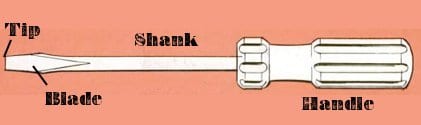
Parts of a Screwdriver

The screwdriver consists of four parts: 1) The handle, 2) the shank, 3) the blade, and 4) the tip.

Types of Screwdrivers

Screwdrivers are distinguished from each other based on their tip and what type of screw they drive. The two most common screwdriver tips are 1) the slot head screwdriver, and 2) the Phillips-head screwdriver.

Slot head screwdriver (Flathead/regular screwdriver). A slot head screwdriver consists of a single, flat blade that fits in the single slot of traditional screws. It’s the oldest and most common screwdriver in the world.

Phillips-head Screwdriver. A Phillips-head screwdriver has a four star point at the end that fits into the corresponding screw’s shallow, cross-shaped depression. This design allows a user to apply more torque than is possible with a flathead screwdriver. The depression forces the blades of the Phillips screwdriver to slip out before any damaging over-torquing can occur.

While these are the most common screwdrivers, several other types exist for different jobs. Browse this site to see the different types of screwdrivers.

What Screwdrivers Do You Need in Your Toolbox?

You don’t need too many screwdrivers in your toolbox. Below is a suggested list of screwdrivers that will ensure you can handle any job you might face at home.

  • Heavy-duty square blade. A long, heavy-duty square blade screwdriver will come in handy for those jobs when you need a lot of torque and driving power.
  • Medium and small slot screwdriver.
  • Cabinet Screwdriver. A cabinet screwdriver has a thinner shank than most screwdrivers. The thin shank allows the tip to reach screws in deep holes without damaging the surrounding wood. Additionally, the tip on a cabinet screwdriver is straight as opposed to tapered as on a traditional flathead screwdriver.
  • Medium Phillips screwdriver.
  • Stubby Phillips screwdriver. Use a stubby screwdriver when you don’t have much space to work.
  • Ratchet screwdriver. If you do a lot of screwdriving, you might want to invest in a ratchet screwdriver. Like the name says, this screwdriver has a ratcheting device that locks the shank in place when turning clockwise, but then loosens when turning counter-clockwise. Instead of having to take the screwdriver tip out of the screw every time you make a rotation, you can leave it in the screw and just ratchet back to your starting position.

Select the Correct Screwdriver

The biggest mistake people make when using a screwdriver is using the wrong kind for the job. Consequently, they either strip the screw, making it difficult to remove if they need to, or they damage a perfectly good screwdriver. Avoid these headaches by following these tips.

Slot head screwdrivers for slot screws, Phillips-head screwdrivers for Phillips-head screws. You’d think this would be obvious, but a lot of men will take a flathead screwdriver to a Phillips screw when they don’t have a Phillips-head screwdriver handy. Don’t be that guy. Sure, you might be able to get away with it a few times, but you’re risking stripping the screw or damaging the blade on your screwdriver.

Use the right tip size. The tip of the screwdriver should completely fill the slot of the screw you’re driving or removing. If the tip is too narrow, there will be considerable loss of leverage while driving, which means you’ll have to use more muscle to drive the screw. Also, you risk stripping the screw and bending the tip of your screwdriver.

If the tip is too wide, you risk damaging the surface you’re screwing into.

If the tip is too thick, the blade won’t fit in the screw slot and will just slip out as you’re driving.

To help you get the right screwdriver for the job, use this screwdriver sizing chart.

Slot-headed Screwdrivers and Screws

Blade Size Screw Size
3/32” O and 1
1/8” 2
5/32” 3
3/16” 4 and 5
1/4” 6 and 7
5/16” 8 to 10
3/8” 12 to 14
7/16” 16 to 18
1/2” 18 to 24

Phillips-head Screwdrivers and Screws

Blade Size Screw Size
0 O and 1
1 2 to 4
2 5 to 9
3 10 to 16
4 18 to 24

How to Use a Screwdriver

Create a pilot hole. When driving screws into wood, it’s a good idea to drill a pilot hole first. Without pilot holes, screws tend to follow the grain of the wood, which results in crooked screws. Thus, pilot holes ensure that you drive the screw in straight.

Moreover, pilot holes prevent the wood from splinting as you drive the screw in. For small screws in softwood, make a pilot hole by using a punch hole and an awl. For larger sized screws and all screws in hardwood, drill a pilot hole with a boring tool of some kind.

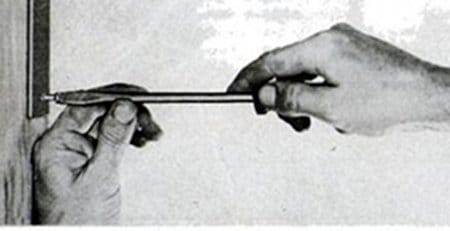
Start the screw. Place the screw on the driver tip and hold both screw and tip together with the fingers of one hand. Apply very little pressure on the driver while turning in a clockwise direction until the screw engages the wood.

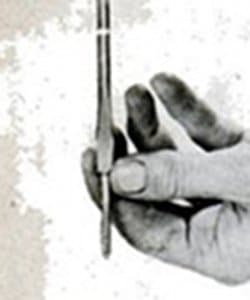
Keep driving. When the screw’s thread engages with the wood, move your fingers that were holding the screw in place to the screwdriver shank. Use these fingers as a guide to hold the tip directly in line with the screw. Apply enough pressure on the driver to keep it in the slot.

Screwdriver Tips From Grandpa

Rub beeswax or soap on screw threads. This makes screws easier to drive, especially in hardwood.

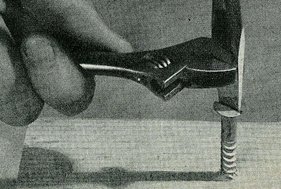
Get more leverage with an adjustable wrench. If you’re driving or removing a particularly stubborn screw, add an adjustable wrench to the equation. Grip the wrench onto the tip of the screwdriver’s blade. As you turn the screwdriver, turn the wrench. This will give you a bit more leverage to move even the most stubborn of screws.

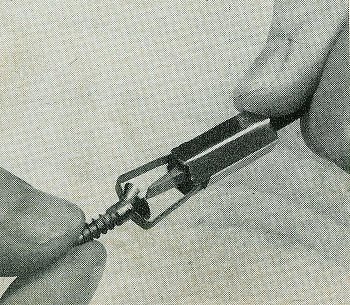
For tough to reach places, use a screw holder. Sometimes you just can’t get your hands into a place to hold a screw as you start driving it. For moments like this, bust out a screw holder. It’s placed on the end of your screwdriver and has a set of jaws that holds the screw in place as you start the driving.

Get more power. For more driving power, use a screwdriver with a shorter shank. Also, try exerting downward pressure on the top of the screwdriver with your free hand.

Maintaining Your Screwdrivers

Use screwdrivers for driving screws only. Screwdrivers do one job: drive and draw screws. They shouldn’t be used as putty knives and wood chisels, for opening paint cans, or stabbling famous cyclists. Using your screwdriver for a purpose it wasn’t meant for will only result in a damaged screwdriver and life in jail.

Keep the tip square (just like your chin). No matter how much care you take with your screwdrivers, they’re bound to get worn or chipped. If you notice your screwdriver’s tip getting a bit rounded or chipped, avoid using it. You risk the screwdriver slipping from the screw and either injuring yourself or the surface that you’re screwing into. To correct any rounding or chipping in your tip, just grind it square with a bench grinder. Avoid overheating the tip. You’ll mess up the metal’s temper if you do.

Oil things up. To avoid rusting, keep your tools stored in a cool, dry place. It also doesn’t hurt to rub the shank down with oil and take some steel wool to your screwdrivers every now and then.

Can’t I Just Use a Power Screwdriver?

I bet many of you are asking, “Can’t I just use a power screwdriver?” Indeed you can. If you plan on driving a ton of screws, an investment in a quality power screwdriver might be worth it. However, be careful when using power screwdrivers or power drills that can be converted to screwdrivers. They often provide more torque and power than you need, which, if you’re not careful, can result in damage to the wood or stripping the screw. Driving a screw by hand prevents that because you can “feel” when the screw is tight enough.

If you don’t plan on doing a ton of screwing (you’re done sewing your wild tool oats), then you can get by with just a set of manual screwdrivers.

DownloadThe Art of Manliness Free Man Cookbook
DownloadThe Art of Manliness Guide to Being a Gentleman

Hawaiiabera Discount Code: AOM


Check Out These Related Posts:

Friday, January 22, 2010

Guy Time & Guy Space

From the AOM Blog:

The Decline of Male Space

Posted: 10 Jan 2010 07:42 PM PST
Once upon a time, the world belonged to men.

Literally.

Because men had exclusive power in both private and public life, they controlled their surrounding environment and the way in which space was designed and decorated. Consequently, the world was once a very masculine place.

Thankfully, we’ve made progress in the area of gender equality and women have brought their influence to bear in both the home and the workplace. However, as with many other areas of modern life, the pendulum has swung from one extreme to the other; instead of creating a world that’s friendly to both male and female space, we’ve created one that benefits female space at the expense of male space.

What’s behind the decline in male space and the proliferation of female space? It’s actually a complex and interesting story that goes all the way back to 18th century. Below we’ll explore some of the factors that have contributed to the near eradication of male space in both public and private life.

Decline of Male Space in the Public Sphere

For most of humanity, the public sphere was solely a man’s domain. Up until as far as the 19th century, it wasn’t even appropriate for women to visit outside the home without a man accompanying her.

However, in the last 100 years, areas designated as male space have shrunk because of changes in attitudes towards gender and anti-discrimination laws.

In this section we discuss five public spaces that were once exclusively for men: the workplace, the bar, the barbershop, the gym, and the fraternal lodge/social club.

The workplace. Perhaps the largest male space in public life was the workplace. For many families in the West, the Industrial Revolution created a strict division of labor where men worked in a factory or office and women stayed home to take care of the children. If women did work, they largely did so in “female” industries like textile factories. As a result, the workplace was a predominately male space with rules and a culture that favored male sensibilities.

When women started to enter the workforce in greater numbers during the 1950s and 60s, many men saw it as an encroachment into their space and resorted to crude sexual harassment as a way to keep women “in their place.” Thanks to laws during the Civil Rights era and an increasing sensitivity and desire by businesses to create non-hostile workplaces, such harassment is seen for what it is and shunned by most males today.

The Bar. For centuries, a man could visit a bar and be in the exclusive presence of other men. Because drinking was seen as a corrupting influence on the “purity and innocence” of women, bars were completely off limits to ladies (exceptions were made for prostitutes, of course). Out of the presence of women and children, men could open up more and revel in their masculinity over a mug of cold ale. However, the bar as a men’s only hangout would quickly see its demise during the dry years of Prohibition.

By banning alcohol, Prohibition forced drinking underground. Speakeasy owners, desperate to make a buck, accepted all drinkers into their establishments, regardless of gender. Moreover, the economic and political empowerment women experienced during the 1920s and 30s made drinking by women more acceptable. By the time Prohibition was repealed, the female presence at the local watering hole had become a common appearance.

World War II only further eroded the male exclusivity of bars and pubs. As more women entered the workforce, it became acceptable to socialize with their male co-workers in taverns and lounges after work.

Today, there aren’t many bars around that cater only to men (gay bars being an obvious exception). Instead, bars have become a place where the sexes come together to mingle and look for a special someone (even if just for the night.)
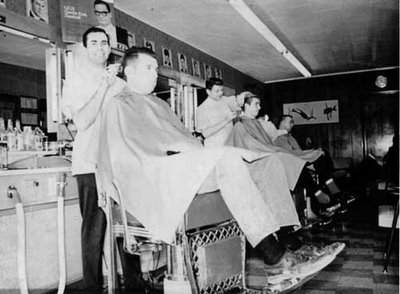
Barbershops. Back in the 19th and early 20th centuries, barbershops were bastions of manliness, and one could be found on every corner. At the barbershop, a man could get a sharp haircut, enjoy a relaxing shave, and take part in some manly banter with his barber and the other customers. Unfortunately, several factors led to the decline of barbershops. Perhaps the biggest factor was the rise of the unisex salon. Places like “SuperCuts,” which were neither beauty salons nor barbershops, catered to both men and women. Many states’ licensing boards accelerated this trend by ceasing to issue barber licenses altogether in favor of offering a unisex “cosmetologist” license to all those seeking to enter the hair cutting profession.

Unlike the bar or workplace, the barbershop hasn’t been infiltrated by women; most ladies prefer the salon and wouldn’t dream of having Old George take the clippers to their head. Rather, barbershops have simply become harder to find. Even if you do find one, don’t be surprised if Old George has been replaced with Georgia.

Boxing Clubs and Gyms. Like bars, boxing clubs and gyms were once exclusively male-only haunts. In the time of women-free gyms, men could focus solely on building their bodies and not worry about impressing the ladies. They were dark, dingy places, that smelled of sweat and exhaustion. Free from the sound of Lady Gaga blasted over the speakers, the only noise was of grunts and the clanging of weights. However, in response to the women’s movement, many states and cities passed ordinances prohibiting male-only businesses and clubs. As a result, women advanced on gyms along with step classes and leotards.

Despite these anti-discrimination ordinances, many states have overlooked the proliferation of female-only gyms like Curves that have opened up across the country. Even when men bring lawsuits challenging these all-women establishments, they’re often dismissed. This unfortunate double standard has only aided in the decline of male space and the rise of female space.

Old school boxing clubs have also been in decline for several years. For many men growing up in the 1920s and 1930s, visiting the boxing gym as a boy was as normal as playing video games is for boys of today. The decline in the number of boxing gyms parallels the decline in the popularity of the sport itself. And some of the boxing clubs that are left have understandably looked to stay afloat by offering “boxing cardio” classes that appeal to women. However, the popularity of mixed martial arts among young men may spur the creation of new male space in the form of MMA gyms. Few females have found an interest in learning the ground and pound.
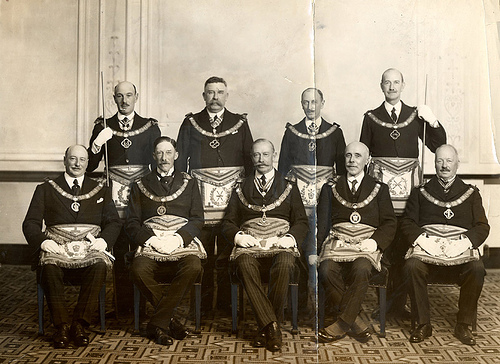
Fraternal Lodges and Social Clubs. Fraternal lodges and all male clubs and restaurants have a long and storied history in the United States and in other countries in the West. During the 19th and early 20th centuries, men flocked to fraternal lodges, like the Freemasons and the Odd Fellows, in order to take part in male fellowshipping. At one time in American history, 1 in 4 men belonged to a fraternal lodge of some sort. However, by 1950 membership began to decline as the demands of family life and work increased, leaving men little time for lodge life. Moreover, under pressure from women’s rights groups, some lodges allowed women to join their ranks. But for the most part fraternal lodges remain all-male. Their biggest problem is just recruiting new and younger members.

In addition to fraternal lodges, male only clubs and restaurants served as a place where a man could enjoy a nice rib-eye with their bros and get candid advice on their career and family life. But male-only clubs would start to feel the squeeze when the U.S. Supreme Court held in 1987 that states and cities may constitutionally ban sex discrimination by business-oriented private clubs. With this green light from the Court, many states and cities started cracking down on male-only clubs and restaurants. New York City was especially vigorous in prosecuting male-only clubs. Perhaps the most famous instance of a once male-only club being forced to open membership to women was the New York Athletic Club. Founded in 1868, the club contained dining rooms, bars, an indoor pool, and a block long gym. Facing legal pressure, the New York Athletic Club opened it’s membership to women in 1989 with mixed feelings on the part of members. Despite the legal and societal pressure, a few-male only clubs still exist in the U.S.

Decline of Male Space in the Home

Paralleling the decline in male space in public was the decline of male space in the domestic sphere. This perhaps was even more dramatic for men because, well, it hit so close to home. A man was once king of his castle, but in a blink of an eye he was dethroned. Here’s a brief primer on how it went down.

The Industrial Revolution: The Beginning of the End of Male Space

Before the Industrial Revolution, you could find most men working in or around the home. This was a time of self-sufficient small farmers and noble artisans. A man used his home as his place of business and, consequently, homes were designed to accommodate the needs of the dirty work of farming, blacksmithing, and leatherworking. When you work every day in dirt and grime, you can’t worry about taking off your boots so you don’t soil the rug. That just slows down the work!

Additionally, the home design luxuries we take for granted today just weren’t available to people in this agrarian society. Carpeting, wallpaper, drapes and even glass windows were items reserved for the very wealthy.

Consequently, the home had a predominately masculine vibe. Exposed beams, dirt floors, and earthen fireplaces were the norm. Tools were left here and there, guns hung above the fireplace, the sheep dog came in and out as he pleased, and a man didn’t think about wiping his feet before he came inside. He didn’t have to worry about a nagging wife getting on to him for mucking up the place because the place was already mucked up. But little did men know that the days of a male-centered abode were numbered.

By the middle of the 19th century, the Industrial Revolution was in full swing. Families moved from the country to the city, and men left home to work in the factories. Women, of course, stayed home to run the household. Thus a strict work/home dichotomy developed, with women given domain over the latter. The Cult of Domesticity, popular during this time, encouraged middle and upper class women to make the home a “haven in a heartless world” for her husband and children, a place where a man could relax and feel comforted after a long day of toiling in the trenches. Without an earthen floor and sawdust shavings everywhere, the possibility of keeping things clean and tidy became attainable, and women bought carpets, white drapes, and flower-filled vases in the name of creating a soft oasis for their husbands. But what they really had made was the type of place a woman would feel most comfortable, and men fled their doily-laden home to spend time at the bars and fraternal lodges with their boys. The home had become female space.

Victorian Era
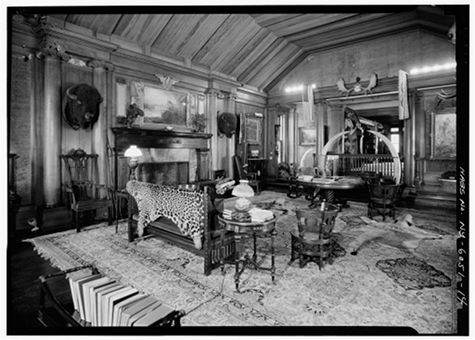
Theodore Roosevelt’s Trophy Room at Sagamore Hill

While male space was chipped away at during the 18th century, there were some consolations. During the Victorian Era, upper and middle class homes were built with several gender specific rooms. These rooms were often divided evenly among men and women. Women had sewing, drawing, and tea rooms; men had billiards, smoking, and trophy rooms. One peculiar male room in Victorian homes was the growling room. That’s right-growling room. Apparently growling rooms were a place a man could go to be alone and “growl” when in a bad mood. (I just use the bathroom for that now. )

This period of gender balance in homes would be short lived, however, and male space would continue to shrink as women took more and more control over home life.

Suburban Living: The Elimination of Male Space
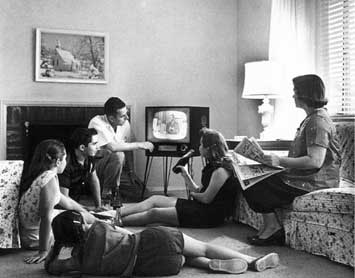
Male space in the home was exchanged for family space.

The period after WWII was filled with dramatic changes in American life. One of the most powerful changes was the migration of white, middle class families from cities to the suburbs. Large developments like Levittown provided returning vets a chance to buy a piece of the American Dream for a relatively affordable price and get started on raising a family.

The rise of suburban culture with its emphasis on creating a domestic nest, usually meant sacrificing male space for the good of the family. Home designs in the 1950s exchanged the numerous, smaller rooms of the Victorian home for fewer, larger rooms. The goal was to create more open space where families could congregate together and bond while watching the Honeymooners on TV.

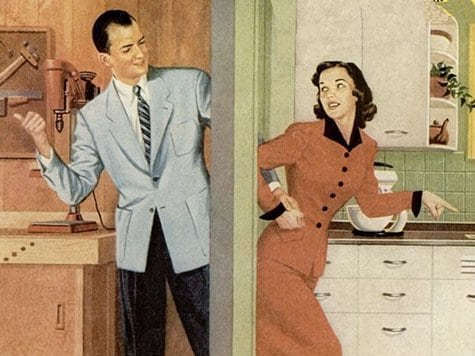
With no room to call their own, men were forced to build their male sanctuaries in the most uninhabitable parts of a home. Garages, attics, and basements quickly became the designated space for men, while the women and children had free reign over the rest of the house.

Men filled these rooms with the trappings of manliness- animal heads, discarded furniture, and pictures of sports figures (or women) would adorn the room. They would use their “man caves” as a place to retreat to when the demands of work and family life felt suffocating. Here they could play cards with their friends or tinker around, working on their car, reading the paper, or doing some woodworking.

But even these undesirable areas of the home would be taken away from men. Basements and attics became game or entertainment rooms to be used mainly by children. And even the least feminine of all places-the garage-would be cleaned up and domesticated.

According to Andreas Duany, an architect and consultant for the New Urban Development, three things occurred that feminized the garage: 1) sheetrocking, 2) the emergence of the storage industry, and 3) home association requirements to keep garage doors closed.

To organize their garages, men had built their own system of workbenches and shelving. But women felt this amateur, rustic solution was still too cluttered. Everything must now be put away in sleek, manufactured cabinetry and plastic storage tubs, with all of a man’s tools and knickknacks hidden away behind a shiny facade.

Sheetrocking covered the once unexposed and manly wood frame in garages, resulting in garages that looked less like a garage and more like another room inside the house.

Finally, homeowner association guidelines that required garages to remain closed made an already inhospitable room even less desirable by shutting out the light and air.

With every room co-opted in the house by women or children, and with few bastions of manliness in the public sphere left standing to escape to, men were relegated to claiming a solitary chair as their designated male space. (Think Archie Bunker and the dad from Frasier.)

Even in a time where men and women are supposed to decide about home décor together, dimes to donuts the women makes the final call. Take the cliché joke of a couple moving in together. It’s usually the man who has to throw out his “silly man things” to make room for the more sophisticated tastes of the women. At that moment, a man realizes that there’s no hope for him to have a place of his own.

Why Male Space is Important

Alright. So you might be thinking, “What’s the big deal? Isn’t it a good thing we’ve gotten past this archaic gender segregated stuff?” Yes… and no. Don’t get me wrong. I’m all in favor of the progress we’ve made, but again, the pendulum has arguably swung too far to the other extreme, leaving men without their own space.

We often underestimate the effects our surroundings have on our psyche. Architects, interior designers, and feng shui experts understand this profound impact. Even famous feminist writer Virginia Woolf understood the importance that space can have on an individual.

In her 1928 essay A Room of One’s Own, Woolf passionately argued that the reason women hadn’t produced as many great literary works as men was because they were denied the same opportunities afforded their male counterparts. The central argument in her essay was that women needed a room of their own in a world that was predominantly male so they could be alone and connect with their true identity and creative impulses.

Eighty years later, it’s the men asking for a room of their own.

Just as male friends play an important role in giving men satisfaction and in shaping their manliness, so does male space. It’s important that men have a place where they can take off their social masks and revel in masculine energy. For many men, the bureaucracy of corporate culture can leave them feeling powerless and emasculated. Having a “man cave” at home, a place men can deocrate as they please and do what they want in can give them a much-needed sense of control, empowerment, and of course relaxation. And spending time in the company of other men at an all-male hang out can help a man reconnect with his manliness

It seems in the past 10 years or so businesses and home designers are starting to recognize the importance of male space. Cottage industries have sprung up dedicated to designing “man caves” in homes, and many a man dreams of building a tiny house in the woods or backyard. Barbershops are coming back in a big way, and men of my generation are becoming interested in joining fraternal lodges like the Masons. Some pioneering men are even starting clubs of their own. After a period of decline, I think we’re seeing the start of a renaissance in male space. With all that’s going on, now is a better time then ever to carve out your own inner sanctum of manliness. So get to it. Your man cave awaits.

DownloadThe Art of Manliness Free Man Cookbook
DownloadThe Art of Manliness Guide to Being a Gentleman

Monday, November 30, 2009

Can you get rid of paper?

And should you?

One of the promises of the computer age was that we would not need paper anymore.

We would read things on our screens and monitors, save digital files, and save the rain forest too!

Yet, I find my life filled with paper. Computers have actually made it easier to print and use more paper than the old fashioned typewriter!

Perhaps, however we can use less paper with these tips from the DLM Blog:

Using Technology to Organize Your Life Without Paper

Posted: 24 Nov 2009 07:57 AM PST


Paper is everywhere in your life: in your car, in your mailbox, in your bookshelves, and even stuck all over your monitor. You may not know it, but reducing your paper use by becoming more comfortable with current technology can lead to a more organized way of life. The majority of successful people in this world live uncluttered, organized lives.

Wouldn’t it be great to have everything you need electronically so it’s easy to find? No more tearing the house apart or digging through the garbage to find a piece of paper that may or may not have been thrown out. No more relying on paper that can’t be replaced if lost.
  • Books
    Transitioning from regular paperback/hardcover books to electronic books may at first seem like the most expensive paper saving technique. However, electronic books not only save paper, but they save you loads of space and the cost of purchasing bookcases, bookends, etc. That leaves you with less furniture to keep tidy and more living space in your home.

    An e-Reader is a small handheld device that allows you to download and view millions of different books. The current average e-reader is about the size of a standard hard cover novel and holds up to 1,500 e-books. If you are used to owning and storing a huge collection of books, then being able to pack them all into one e-reader will save you a heck of a lot of space in your house.

    Let’s say you go to a bookstore and the book you are looking for is out of stock. You’ve wasted your time and gas for nothing. What if you’re sitting in an airport and your flight is delayed. You just finished your book, and are left with nothing to read. In both situations all you would have to do is download the book onto your e-reader wherever you have a wireless connection.

  • Magazines
    Do you really need to read magazines? Hasn’t pretty much all of the information you are reading been posted on the internet already? The broad availability of information on the internet has drastically reduced the need for magazines over the past few years.

    If you must read them, most popular magazines have electronic versions available on their website for a nominal amount of money.

  • Newspapers
    I almost forgot about these things. I hate to be advocating for a cause as newspaper companies are going under, but the internet has taken over the need to purchase the daily newspaper. Google homepages, MSN.com, or your news website of choice is the go to resources for daily news. If you are paying for the internet, why would you need to pay for newspapers?

  • Sticky Notes
    Every day you write down notes to yourself. Whether it’s jotting down someone’s phone number or a note to “Pick up milk”, a smart phone can be the solution. Smart phones are wireless devices with email and internet capabilities, and most often have a full keyboard.

    Smart phones are pretty much the standard when buying a new cell phone. Many times people don’t think they need a smart phone because they aren’t aware how its features can simplify their lives. With a full keyboard, you can easily take notes and type in someone’s contact info. If you use Outlook or Entourage, you can sync (have current information in two places) your notes and contacts so they are available on your computer as well. Remember, even the most basic cell phones have a note taking feature on them. So instead of writing notes on paper, type them into your phone. Your phone is one of those things you won’t accidentally throw away.

  • Notepads
    Every student takes notes in their courses. Well, all the ones that want to pass do. What happens if that notebook suddenly goes missing? I’ve got a three-step process to taking, organizing, and backing up your notes.

    1. For those of you in class, bring your laptop and take notes. There were a few times in college where I wrote notes and couldn’t understand what I wrote. With typing, you avoid this issue.

    2. Organize your notes in folders on your computer’s desktop. The top level should be for the semester, and then within that folder should be a folder for each course. Inside each folder should be a file for each day. I would keep the naming format simple, for example, “date – quick summary of what was talked about”.

    3. Backup your files every night to be sure they are available in case of a problem. There are free services that offer online backup of your files, which make everything easily accessible should your computer turn against you.
    If it is available to you, you also have an option of using Microsoft OneNote 2007. You can create a new notebook, and add pages for each day.

    After the college years comes the real world of work. Depending on your business, it may or may not be the best practice to bring a laptop into every meeting. If you can bring your computer into the meeting, by all means do so and take notes. However if you cannot bring your computer into a meeting, transfer those notes to your computer as soon as possible.

    Time is usually something you don’t have a lot of in the business world, so don’t bother typing. Use a scanner to scan notes, and then use your organizational skills to appropriately file them in your computer for easy access.

  • Bills
    Chances are a lot of you are doing this already, but if you are not, start paying any bills you can online. If there is the option to go paperless, do it. Most people elect not to do this, leaving them with a pile of unopened bills each month. If there is ever a need for a hard copy of the bill, you can usually print out a past statement which should be available to download from your account.

  • Checks
    If it weren’t for paying rent, birthdays, holidays, and other gift giving situations, checks would be of no use to us. Most banks offer great electronic methods of paying all of your monthly bills. If you need to pay money to a person, Paypal has become the standard for sending and receiving money online. Anytime you are thinking of sending someone a check, send them money through PayPal. Setup is easy, and you can even configure your cell phone to send money to others.
Getting comfortable with current technology is the key to reducing your paper use. Practice using one tip weekly to get accustomed to doing things differently and more efficiently. Added bonus: Not having to take the garbage out as often. That’s something we can all benefit from.

Written on 11/24/2009 by Jay Scarrozzo. Jay is the author of Go Ask J and owns his own computer service company. He has a BS in Computer Information Systems and believes that new technology can be used by all if taught correctly. His blog focuses on providing new technology news that everyone can understand and appreciate.Photo Credit: burgermac

Thursday, November 05, 2009

Information Overload?

Let's face it. We have access to more information from more sources, than ever before.

How do you manage it? Some ideas from the DLM Blog:

How to Take Action on What You Read: Filtering and Using Information

Posted: 03 Nov 2009 07:35 AM PST

You spend a lot of time reading. Whether it’s blogs, magazines, journals, Twitter streams, newspapers or good old fashioned books, you’ve got a huge amount of information at your fingertips. Every day, you take in tons of ideas for overhauling your life: whether it’s shaking up your fitness regime, working more effectively, or having stronger relationships.

The problem is, it’s easy to get caught up in this sea of information. You might feel inspired when you read a particular blog article, or you might get a great idea from a journal... but all too often, that thought barely gets started before the next piece of information rushes in.

So how can you make sure that you’re not just passively reading through pages of information – you’re actually taking steps to make serious improvements in your life?

Avoiding Information Overload
First off, I’d say that it’s better to read a dozen articles and really make use of them, rather than skim a hundred. If you currently have a lot of magazine and journal subscriptions, or you have loads of blogs and email newsletters that you keep track of, consider whether it’s time to cut down.

If, like many of us, you use your email and your RSS reader for business purposes and for entertainment, then try dividing up your mail and feeds into sensible categories. I have a category in my RSS reader labeled “personal development”, and keeping these in one places means that when it’s time to read them, I’m ready to make notes and take actions as necessary. If you use Google Reader, try The 10 Most Useful Google Reader Productivity Tips to make sure you’re using it as effectively as possible.

Using a Notebook (Paper or Electronic)

First, you need a way to capture those ideas. Trying to hold them all in your head just won’t work and you know it! Whenever you’re reading for information (rather than for entertainment), keep a notebook on your desk or a document open on your computer. Jot down anything that comes up: it might be a reference that you want to look up, a particular tip you want to implement in your life, or a reminder to yourself.

Simply writing something down doesn’t get it done though. We’ve all written down lists of ideas and then forgotten about them for weeks. I have a couple of ways of avoiding that: which of these would work for your projects?
  1. Transferring Notebook Items to a Task List, Calendar, or Diary
    Every day, or every couple of days, go through the list of items in your notebook (or document) and decide how to fit them into your task list. This might mean scheduling some time in your calendar, or it might simply mean adding them to a “to-do” list.

  2. Use a Separate Notebook For Each Project
    When your notebook jottings relate to long term projects (such as improving your company’s website or decorating your house), keep them in one document. When you come to a day or an afternoon which you’ve earmarked for that project, simply open up your document and all your ideas will be in one place.
Using Online Tools
There are loads of online tools or pieces of software which can be used to capture, track and manage tasks and pieces of information. By all means use these but make sure you’re actually using them. By that I mean that there’s no benefit in bookmarking dozens of websites if you don’t ever go back and read them or put their advice into action! For some great advice on using bookmarks effectively in Firefox, read 9 Power Tips To Utilize Your Firefox Bookmarks.

I personally like Delicious for keeping track of web pages that I want to come back to or which I think might be useful to me. Often though, I simply keep URL links in the file which relates to that particular project.

It’s very easy to end up spending a lot of time tagging, filing and organizing online materials without really taking any action. Be strict with yourself and if a particular tool is becoming a time-waster, don’t be afraid to ditch it.

Finally ... Don’t Try to Take In Everything
There is far, far more information available than any of us ever have time to read. Much of this is great, authoritative, even life-changing stuff. However, if we all tried to keep up with everything, we’d never be able to actually take any actions. (Check out Six Smart Ways To Beat Information Overload if you’re struggling to stem the tide of information.)

Don’t worry about missing out: if there’s a truly life-changing idea out there for you, you’ll come across it one way or another. Ultimately, books, blogs, magazines and journals may well change the direction of your career or even your life ... but only because you make the time to take conscious action.

Written on 11/03/2009 by Ali Hale. Ali is a professional writer and blogger, and a part-time postgraduate student of creative writing. If you need a hand with any sort of written project, drop her a line (ali@aliventures.com) or check out her website at Aliventures.Photo Credit: dylanroscover