Sunday, November 07, 2010

You Too Can Be A Weatherman

from the AOM Blog:


Forecast the Weather Like Daniel Boone
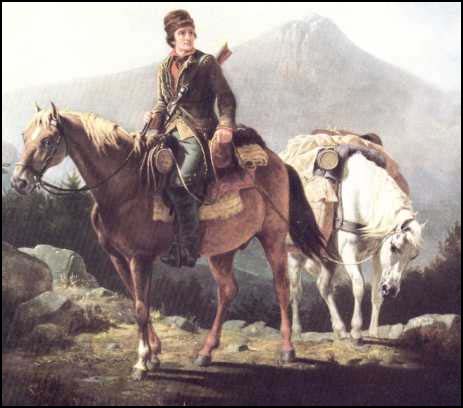
Technology has brought the world a long way, enabling us to consume more information in a few short minutes on Google Mobile than folks decades ago could locate in a week by plowing through books at the local library. And yet, with all this readily available information and the focus on being able to find information, the need to actually know and retain information has been decidedly diminished. There is still something to be said, however, for retaining the knowledge and skills that the men of yesteryear needed to survive, such as navigating by compass or starting up a respectable campfire. With that in mind, and with hunting season just around the corner, let’s look to the skies and sharpen up our skills in forecasting the weather.

Weather forecast for tonight: dark. Continued dark overnight, with widely scattered light by morning. -George Carlin

Now keep in mind that if the national weatherman equipped with Doppler radar and satellite imagery gets it wrong from time to time, you will too. Taking that into consideration, it is probably best to avoid making high dollar wagers with your buddies when you are confident that it will begin storming in the next few minutes. And yet, by utilizing nature’s telltale signs, you can make some fairly safe assumptions regarding what is around the corner weather-wise. Let’s take a look at some of the basics:

Cloud signs

As far as nature’s weather signs go, clouds will provide you with the most accurate indicators of things to come. Clouds are essentially water droplets or ice crystals (depending on altitude) that mass together in the atmosphere. There are many types of clouds, far too many to list, but some of the basic cloud types can indicate what weather patterns to be prepared for.

Cumulus

Cumulus clouds themselves are most often associated with pleasant weather. It is cumulus clouds that often take the shape of various characters in the imagination of creative youngsters as a result of their puffy, continuously changing appearance. While they are a sign of agreeable weather, it is not uncommon for cumulus clouds to form into cumulonimbus clouds, aka thunderheads, which are a sure sign that it is time to batten down the hatches.

Stratus

Stratus clouds are flat and featureless and often completely blanket the sky. As opposed to cumulus clouds, which are flat on the bottom and rise dramatically on the tops, stratus clouds are flat both above and below. While they usually do not indicate extreme weather to come, they do often produce a light drizzle or flurries.

Cirrus

Cirrus clouds are high altitude clouds which resemble wispy brush strokes. When the wisps curl at the end, they are often referred to as mare’s tails. These clouds are regularly associated with approaching storms, but can also come directly after a thunderstorm has passed.

Nimbus
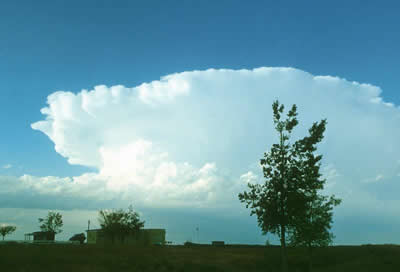
Nimbus clouds can refer to any of the above clouds which have taken on a dark color, thus indicating high moisture levels within the cloud and rain to come. For example, a cumulonimbus cloud is a cumulus cloud that is uncharacteristically dark and foreboding, and is associated with thunderstorms. Cumulonimbus clouds often rise like towers into the sky and sometimes take the shape of an anvil, with the longer end of the anvil head typically pointing in the direction the storm is heading.

Proverbs That Stand the Test of Time

Weather proverbs are likely nearly as old as language itself, with the earliest recorded proverb dating back to the New Testament of the Bible when Jesus noted that “When evening comes, you say, ‘It will be fair weather, for the sky is red,’ and in the morning, ‘Today it will be stormy, for the sky is red and overcast.’’’ (Matthew 16:2). While some proverbs add up to nothing more than old wives’ tales, many are based in scientific fact. Here are some notable examples of the latter:

“Red sky at night, sailor’s delight; Red sky at morning, sailors take warning.”

and

Evening red and morning gray, help the traveler on his way. Evening gray and morning red bring down a rain upon his head.”

When looking west in the evening, a visibly red sky can be taken as a clue that dry weather is coming (or staying). The red sky is caused by dust particles in the atmosphere, which only occur in dry weather. Since weather systems typically move west to east as a result of jet streams, you can safely assume that this dry weather is heading your way. A morning red sky in the east, however, denotes that the dry weather has passed you by and that a moisture rich weather system is likely to follow.

“Flowers smell best just before a rain.”

and

When ditch and pond offend the nose, look for rain and stormy blows.”

Everyone is familiar with that smell that occurs after a good summer rain, when the air is rich with the smell of plant life. This is a result of an increase in air moisture or humidity, which drastically increases the strength of smells in the air and the distance they carry. Also, it is believed that the smells of swamps and marshes are held down near the surface when atmospheric pressure is high, but low atmospheric pressure allows these foul odors to rise and carry. Both the increase in humidity and the drop in atmospheric pressure associated with these proverbs are signs of wet weather to come.

Chimney smoke descends, our nice weather ends.”

Keep an eye on the smoke from that roaring campfire you just built. If the smoke rises in a straight stack, you can anticipate fair weather to come. If the smoke rises in a stack as normal, but appears to be buffeted downwards once it reaches a certain height, you can bet that a storm’s a-brewin’.

Beware the bolts from north or west; in south or east the bolts be best.”

As mentioned above, most weather systems travel west to east. This proverb simply infers that visible storms in the west are most likely headed your way, while those in the east have passed you by.

A ring around the sun or moon, means rain or snow coming soon.”

The visible ring sometimes appearing around the sun or the moon is a result of ice crystals in cirrus clouds refracting the light off these celestial bodies. Since cirrus clouds generally indicate foul weather to come, you can assume that it is time to start waterproofing your camp.

When clouds appear like rocks and towers,
The Earth’s refreshed by frequent showers.”

A reference to the cumulonimbus cloud patterns mentioned above, this proverb serves as a simple reminder that such clouds indicate that a storm is likely coming your way.

Tools of the Trade: The Barometer

Some of nature’s signs cannot be understood simply by observing them but require tools to measure. By utilizing a barometer, you can measure the atmospheric pressure which can provide you with a great deal of information on what type of weather is just around the corner. In the most basic sense, a barometer indicating high pressure in the area lets you know that fair weather is likely, while low pressure is a sign that you can anticipate wet weather to come.

Before you can get started you’ll need to be sure you have the proper equipment. Most personal use barometers are known as aneroid barometers and contain no liquid. These barometers contain a spring which is calibrated using a dial or knob located on the back of the unit. In order to calibrate your barometer properly you will need to head over to http://www.weather.gov/ and get a local weather report, which will include the current barometric pressure. Adjust your barometer to match.

While a general understanding that high pressure is good and low pressure is bad is a start, more advanced and accurate information can be gleaned from the barometer as well. The following barometer reference card, taken from Skills for Taming the Wilds by Bradford Angier, will assist you in your short term weather forecasting forays (Keep in mind that these measurements and what they indicate are only representative within the U.S. and Canada).

BAROMETER WIND WEATHER
High, steady SW to NW Fair with little temperature change for one to two days
High, rising rapidly SW to NW Fair with warmer weather and rain within two days
High, falling rapidly E to NE Summer: rain in 12 to 24 hours

Winter: snow or rain with increasing wind

Very high, falling slowly SW to NW Fair, with slowly rising temperatures, for two days
High, falling rapidly S to SE Rain, with increasing wind, in 12 to 24 hours
High, falling slowly S to SE Rain within 24 hours
High, falling slowly E to NE Summer: light winds, fair

Winter: precipitation in 24 hours

High, falling slowly SW to NW Rain within 24 to 36 hours
Low, rising rapidly Shifting to W Colder and clearing
Low, rising slowly S to SW Clearing soon and fair for several days
Low, falling slowly SE to NE Rain for one or two more days
Low, falling rapidly E to N Northeast winds heavy with rain or snow, followed in winter by cold

Source Material/Further Reading:

Skills for Taming the Wilds by Bradford Angier

The Book of Survival by Anthony Greenbank

National Geographic’s Complete Survival Manual by Michael S. Sweeney

Fort Wayne Site-of-the-Day


Click on Pic

Saturday, November 06, 2010

Friday, November 05, 2010

Leadership

a few words from the DLM Blog:

The Golden Rules of Great Leadership

Posted: 20 Apr 2010 03:56 PM PDT


A leader is best when people barely know he exists, when his work is done, his aim fulfilled, they will say: we did it ourselves. ~Lao Tzu

Leadership isn’t just for CEOs, coaches and managers. Throughout your life, your ability to perform as a leader can make all the difference between an experience of success and ease, and a feeling of frustration and powerlessness.

Many of you are true leaders without knowing it! If you’re a parent, then you’re a leader. If you’re married, you’re a leader. If you have to teach a class or manage a family budget, you’re a leader.

Thousands of Books have been written about leadership and management. Companies spend millions training their leadership teams, and rightly so – leadership in specific areas can be a skillful and demanding role. But, as with everything else in life, the key to it all is very simple.

The golden rules of leadership can be expressed in many ways, and here are some of them and no, this is not an inclusive list - simply a handful of what I view as the most important.
  • They are good role models
    Great leaders lead by example. They don’t ask other people to do something they wouldn’t be prepared to do themselves. They model the kind of behavior they want to see in other people – risk taking, proactivity, self-reflection, honesty.

  • They empathize
    A good leader will put herself in the other person’s shoes. She understands that nobody is trying to do a bad job, that everyone is doing what they think best. It might not be what the leader herself thinks is best, of course, but this recognition that there are other perspectives and a genuine willingness to understand another point of view sets good leaders apart.

  • They are flexible
    There are usually many different ways to get a job done well, and a good leader will recognize this. He will seek the views of others and change his own ideas accordingly. A great leader is always learning from others, always adapting and ready to try something new.

  • They embrace contrast
    Everyone is different, and a good leader will use this diversity to his advantage. Contrast and diversity leads to innovation. A poor leader will try to impose uniformity, but a good leader will encourage new kinds of thinking, originally and fresh perspectives.

  • They communicate
    A good leaders doesn’t expect people to read her mind, and she knows that good communication is very difficult. It requires a lot of care and a lot of patience. She will spend time and energy trying to communicate in a genuine way. Meetings and conversations will be interactive and not just on person lecturing another. She will genuinely be open to what is said and will look under the surface to see what other people are really trying to say.

  • They give praise
    There is always good stuff happening, and even when he has to make a criticism, the good leader will find something good to say first. He will always focus on the success, the good qualities, the things going right. He is positive and knows that the future is bright.

  • They trust people
    I’m sure we’ve all worked with bosses who (sometimes literally) peer over your shoulder to see what you’re doing. A good boss will be clear about expectations and then let you get on with the job, giving support and encouragement when necessary.

  • They empower others
    We all need to feel that we are able to make a difference, and a good leader recognizes this. She will not hold on too tightly, but will give away power, distributing it to others and so enabling individuals to learn and grow as they add value to the situation.

  • They have a light touch
    Holding on too tight, being inflexible – these are sure ways to failure. A poor leader will try to control everything, but a great leader will know when to act and whan to leave well alone. Lao Tzu wrote, ‘Governing a great nation is like cooking a small fish - too much handling will spoil it.’
Many more traits could be identified, but the ‘golden rules’ of leadership tie all of these qualities and behaviors together. It unifies the apparently diverse skill-set of good leaders and informs their thinking and their action. Can you see what it is? And, most importantly, can you put it into practice in your own life?

Written on 4/20/2010 by Mark Harrison. Mark Harrison writes about personal growth, communication, and increasing personal wealth. Check out his new book, Thirty Days to Change Your Life.Photo Credit: I'll Never Grow Up

Fort Wayne Site-of-the-Day


Click on Pic

Thursday, November 04, 2010

Video Time: My Dog, the Maid

I saw this video last month and I'm still not convinced to get a dog again. After all, I want one that can feed himself and clean up his own poop. Sort of like my cat.

And I'm not sure if the dog in this video would be fun or annoying. I'll let you decide:

Fort Wayne Site-of-the-Day


Click on Pic!

Wednesday, November 03, 2010

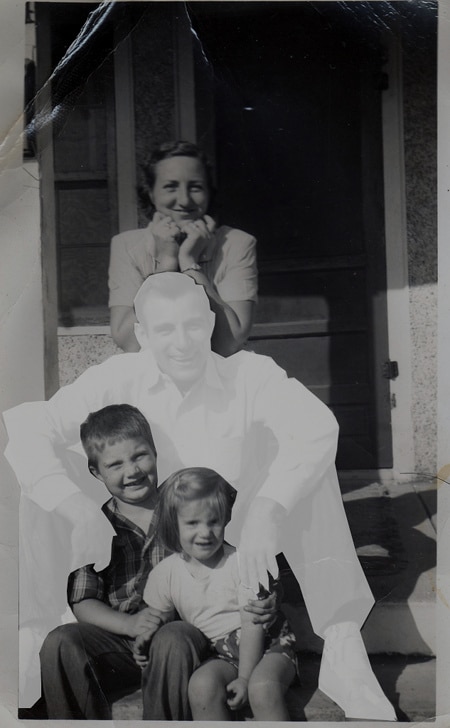
He would have been 80 today..

I'm speaking of my Dad. But instead he passed away in 1998 at the age of 67.

I hope to outlive him. I still miss him. The following is from the AOM Blog:


Losing Dad: How a Man Responds to the Death of His Father

Editor’s note: This is a guest post from Brian Burnham. Mr. Burnham holds a Masters of Education in Counseling from the College of William and Mary and is a Care Coordinator for Riverside Behavioral Health Center.

“His heritage to his children wasn’t words or possessions, but an unspoken treasure, the treasure of his example as a man and a father.” — Will Rogers Jr.

While growing up, our fathers, whether for good or ill, are our earliest and strongest examples of manliness. Even for those who grow up fatherless his influence is a major one, conspicuous for its absence. It is therefore only natural that the death of a man’s father is an event that holds incredible and often very painful significance. When I last wrote for the Art of Manliness, I spoke to the ways in which men grieve. It is not surprising that many of the men who responded to that article alluded to the loss of their father. While a man grieving the loss of his father will go through an experience similar to what was previously discussed, the fact that the deceased is the man’s father makes the experience unique. Many men who have lost their fathers describe it as a loss like no other. They report that the way they grieved their father was different from any other grief that they experienced and often felt that the only people who could readily understand were other men that had also lost their fathers.1 I know that I certainly felt this way when my father passed in February 2009. It is that uniqueness, as well as the short and long term effects of losing a father, that I hope to address here.

In their book When Your Father Dies: How a Man Deals with the Loss of His Father, Dave Veerman and Bruce Barton interviewed sixty men from all walks of life who had lost their fathers. While each man’s story was unique, the authors identified and described the common themes that readily emerged from these accounts.

Vulnerability. When our father dies, we frequently lose much more than the person of our father. It’s often surprising to men how the world doesn’t stop at his passing. Sons are acutely aware of their father’s passing, and when the world doesn’t share that same awareness it can leave the grieving son feeling terribly alone and isolated from a world that doesn’t seem to understand. Many men experience a sense of being an orphan even if their mother is still alive because they feel so alone in the world. This sense of vulnerability is compounded by the fact that for many of us our fathers served as a kind of shield. We knew that we could count on dad for help and advice when things turned against us. With his father gone, the son may not know where he can turn in a crisis and feel vulnerable and afraid. This holds true as well for men who had a negative or non-existent relationship with their fathers. While dad may not have been a protector or provider, men still feel vulnerable and alone, often feeling that they are the only ones that can break negative cycles in their families.

Awareness of Mortality. As I noted in my last article, we live in a culture that prefers to deny and avoid the reality of death. However when a man loses his father the reality that life is finite and that he too will someday die becomes inescapable. While this realization can come anytime death touches us, it is particularly potent when we lose our fathers. This is because many men see their father as part of themselves and a small part of them has died with their dad. Not only is the inevitability of death driven home, but also its finality. The son knows that he will never (at least in this life) see his father again, and that when he too dies it will be just as final. Some may say, “So what, death is an objective fact, why should losing a particular person make this fact so much more frightening?” The problem is the illusion of control. We as men all operate under the assumption that we are in command of our own destiny, that we are in control. In many cases this is more or less accurate; however, when it comes to death, this simply isn’t true. Having our protective illusion stripped from us is terribly emasculating since no amount of self-control or problem solving can bring back the dead. This leaves the surviving son grieving not only his father, but also the new understanding he has reached.

Loss of Audience. It’s a classic American image, the son playing sports and the father coaching and cheering him on. This dynamic between father and son isn’t limited to sports but extends to many areas of a son’s life. A son will often go out of his way to please his father, and he is one of the few people that it is acceptable to truly brag to. We can proudly bring home our trophies and A+ papers to show to dad, and this dynamic extends well in to adulthood as men share their accomplishments in college, their career, and family. When our father is gone it feels, not like the audience is missing a member, but the whole audience is gone. For sons who are also fathers themselves this loss extends to not being able to share the accomplishments of their children with the proud grandfather and not being able to seek out advice for parenting. Many sons miss dad not only when they need parenting advice, but when they need their old coach in any area of life that’s giving them trouble. For a man whose father was distant or absent, this loss of audience was felt long before his father’s death as he struggled in vain to earn his father’s approval. Now at his death the loss is doubled as the son realizes he can never gain the approval he craved when his father was alive.

Taking Up the Mantle. In many ways the death of a father serves as a right of passage, though a painful and difficult one. This is due to the fact that for many sons their inheritance is less about property and more about responsibility. Many men, regardless of their age when their father died, feel like they grew up suddenly and significantly when it happened. Their father’s death leaves a vacuum in the family dynamic, and sons often feel compelled to step up to try to fill their father’s role. This is especially true if the father had been the leader and protector of the family. Sons may feel a great deal of pressure and may not feel up to the task of protecting and leading the family. If Mom is still alive, then caring for her will often be a central focus of this sense of responsibility. At best this will lead to growth for the son, and the family will pull together and become closer as it adjusts to the new dynamics. However, this is not always the case. Family members may resist the son’s efforts to take a leadership role; siblings may even compete for leadership within the family. At worst this can lead to a family disintegrating without the presence of the father that had once held them together. For men whose fathers were absent or abusive, the idea of taking up their father’s mantle is sometimes frightening. These sons have no desire to fill the same dysfunctional role as their father and feel an intense pressure to break the painful cycles that their father had embodied.

A Long Shadow. As a boy grows, he learns many lessons and skills from his father who serves as his mentor and teacher. The son also quickly learns that in these circumstances it is often better to do things his father’s way both because he has more experience and because it is often not worth the hassle of disobedience. Sons long for the approval of their fathers and live to be told “good job.” This desire for a father’s approval and dislike of disapproval extends into adulthood and men are not free of it even after their father’s death. Sons will often feel the presence of their father when they use skills that they learned from him, visit places associated with him, or use his possessions. When it comes to these possessions many men report keeping a memento or two of their father that helps them stay connected to him. For me personally, it is my father’s drafting tools and his wedding band, which serves as my own. However, sons can find it difficult to get rid of or make changes to their father’s property. They often feel like they’re trespassing and feel the sting of their father’s disapproval. They may also feel this sense of disapproval when they choose to do things in a way other than “Dad’s way.” Conversely sons will still long for their father’s approval, holding up things they do to scrutiny and asking themselves “Would dad be proud?” In this way the long shadow of our fathers affects the way we live our lives long after his passing. This is superficially similar to the “loss of audience” experience because in both experiences the grieving son longs to interact with his dad again. The experience of the long shadow differs, however, in that it is less about having someone to watch and cheer and more more about seeking approval and avoiding disapproval.

Our Father’s Legacy. As the son progresses through the grieving process, one of the tasks he will inevitably work through is sorting through the legacy his father has left him. Men will often look at the life of their fathers and that of their grandfathers and great-grandfathers to try to take stock of their heritage and to see how their father’s values and lifestyle have influenced them. Some sons will look back happily on men of character and values that they admire and hope to emulate. Other sons will look back to see a chain of flaws, faults, and abuses-a legacy they’d rather leave behind. But even these sons usually seek some positive quality in their father’s legacy that they can hold onto. For the son who is also a father, examining the legacy also comes with the realization that they too are a link in this chain, that someday they will be passing the legacy on to their own children. Many men are inspired by this to forge stronger relationships with their children so that the legacy they leave is one that their children can be proud of when it is their turn to mourn their father.

While these themes are typical of men that have lost their fathers and lend the perspective and understanding that is an important part of healing, it is extremely difficult to effectively capture the uniqueness and complexity of this experience. I personally continue to struggle to understand the loss of my father. Even as I wrote this article I would at times have to stop as memories came flooding back and all I could do was sit there at my keyboard and cry. Even as I struggle though, I know that I have gained at least one thing from mourning my father, a determination to live a life that will find me worthy to be called my father’s son. For each reader who is a son who has lost their father I would encourage you to do two things. First I would encourage you to struggle. While this may seem odd, it is in working through the turmoil of mourning that we stand to gain the most as men. Second I would encourage you to seek out the company of other men in the same position. They can provide some of the strongest support. Fortunately for us, AoM is an excellent place to seek out the support of our fellow men.

To this end I have started a Group in the AoM Community, “Remembering Dad,” for men who have lost their fathers. It is a place to mourn, celebrate, and remember our fathers and a place for men to share experiences and draw strength from one another. I invite you to join up.

Now I would like to turn it over to the reader to share stories of their dads and their struggle so that we can together search for meaning.

Source:

When Your Father Dies: How a Man Deals with the Loss of His Father by Dave Veerman and Bruce Barton

  1. Veerman, D., & Barton, B. (2003). When Your Father Dies: How a Man Deals with the Loss of His Father. Nashville, TN: Thomas Nelson Publishing.
Check Out These Related Posts:

Fort Wayne Site-of-the-Day


They've something planned for Sunday. Click on Pic

Tuesday, November 02, 2010

Tech Tuesday Tip


For the non-techie, this weeks idea:

Subject is E-mail.

We used to depend on the Mailman.

Then fax machines and overnight delivery services like Fed Ex.

Email used to be manageable until we got bombarded with Spam.

My spam is manageable due to using Google's G-Mail to filter out the crap. Currently I get an average of 11 spam messages an hour 24/7.

Then smartphones including Blackberry's came along so you can't escape being connected.

But you can manage it.

And one way is to manage expectations.

Check out this idea from a blog I read:

Be Like Mike: Managing Your Email Inbox

Posted: 21 Oct 2010 03:30 AM PDT

Yesterday, my partner Michael Drew (the entrepreneurial genius behind Promote-A-Book and several other successful adventures) emailed me a congratulations for something that had gone well.

When I emailed him a quick reply of thanks, this immediately came back.

Mike's Auto-Responder Establishing Expectations

Genius. It immediately sets up my expectations without sounding off-putting. Well played, Michael.

I’m a big fan of closing up email when working, but this takes it to another level. Notice how he gives alternatives should someone consider the need to reach Mike an emergency?

Please consider this stolen, Michael. And thanks.

Fort Wayne Site-of-the-Day


Click on Pic

Monday, November 01, 2010

New Habits

Lot's of new things are coming.

Two months until a new year.

One day until election day in the United States.

Sometimes others determine when something new will start.

But usually, it's up to us as individuals to pick the date.

Check this advice out from the DLM Blog:

6 Steps To Getting Started With Something Totally New

Posted: 15 Oct 2010 03:56 PM PDT


Have you ever wanted to do something different but stopped yourself because you knew nothing about it and had no idea how to move forward? Of course! We all have.

Many people have dreams and aspirations to fulfill, but they are intimidated by their lack of knowledge. Because of that, they halt in their tracks and stick to the things they do know. Many of my clients and readers often approach me saying they would like to pursue a certain passion, such as being a writer, starting a business, becoming a chef, creating a clothing line, and so on, but they aren't doing it because they don't know what to do. That's a pity because it doesn't have to be that way. It's a matter of taking the right steps and actions to get started.

In this article, I'll share 6 things you can consider if you'd like to tackle something new but aren't sure how to get moving.
  1. It doesn't matter if you know nothing
    This isn't a specific action but a belief to be addressed. It doesn't matter if you know something or nothing. If you have a goal, you set it and you go out there and get it. As simple as that. Knowing nothing should never be a reason for not pursuing a goal, unless you don't even want the goal to begin with. After all, all of us once started from a position of knowing nothing. Think when we were born and we were babies. None of us knew anything then. It was growing up that we acquired the skills and knowledge.

    2 years ago I wanted to pursue my passion to help others grow. At that time, I didn't know anything about the personal development industry. I didn't know anything about how to create a popular blog, or what life coaching is about, or what it takes to be a good trainer or speaker. Yet, it didn't stop me from pursuing my passion and creating a 11,000 subscriber blog today. It didn't stop me from coaching hundreds of smart, talented clients to success or speaking to thousands in workshops and seminars. Knowing nothing doesn't mean you don't do it. It simply means that you just need to learn it first.

  2. Read up about the topic
    I did a lot of reading when I first started out in '08. I read Problogger and Entrepreneur's Journey on how to create a popular blog. I read Copyblogger to learn more about writing good content and articles. I also laid my hands on the best selling personal development books to learn more about the topic. I did this intensively for a couple of weeks, which equipped me with a whole wealth of knowledge on how to get started.

    I had a participant in a workshop tell me that he wants to be a better networker, but he doesn't know how to get more information on how to. That shouldn't be the case! There are so many books and websites out there today that you can easily read up about just anything you want to. Some places to start with - Google, Scribd (some great ebooks are listed here), blogs, your local library, workshops and seminars.

  3. Create a plan to start off
    After I did the research, I created a plan on how I was going to move forward. My end goal to create a top quality personal development blog, with important resources to help people around the world achieve their highest potential and live their best lives. I had a 5, 3, 1 year outline, and a rough 6 month plan on what I was going to do and the milestones to achieve. My personal 5-step goal achievement framework, ESPER, was critical in bringing my goal to life.

    I found from experience that you should just plan whatever is necessary to move forward. The objective of a plan is to empower you, not to hold you back. Some people let themselves be paralyzed by the whole planning process. They keep planning, and tweaking, and planning, to the point where they never take action at all. That shouldn't be the case! Just plan to the extent where you're comfortable, then get started.

  4. Study people who have already made it
    There are so many people around the world that there's bound to be someone who's already doing what you want to do. Look out there and identify the people who have already succeeded in this goal. Then, learn from them. Study what they are doing and how they are doing it. Because they've been doing this for longer than you have, there will be something valuable to learn from each and every one of them.

    When I first started out I spent a lot of time studying the bigger blogs, understanding . Even today I continue to do so for both the smaller and bigger blogs, since there's always something to learn from everyone. Everyone has incredible ideas to share; it's a matter of whether you're able to learn from them.

  5. Consult people who have achieved the goal
    If possible, connect with the people in #4. With the internet, it's easy to reach out to such people. Drop them a friendly email to say hi and to express your intentions. If they don't reply, that's okay; if they do, then that's terrific. As a matter of practicality, A-list folks are usually busy and unavailable, so try the B-list or C-list folks, who are very knowledgeable and more approachable. (By A-list, I refer to the best people in their respective fields.) A great way is to arrange for a lunch meet-up (if they live in the same country as you), get to know them better, then treat them to lunch as a thank you. Some of them have services you can sign up for, which is a sure way to get to them. Of course, only engage their services if you find value in them, and not just to get air time.

    For myself, I find that doing steps 2-4 are more than sufficient to get me started (step #6). I see step 5 as a bonus step, but not the determining one, since you shouldn't depend on others to help you (after all, they have their own responsibilities and projects). When I first started, I connected with a few other personal development bloggers, whom I continue to stay in touch today as good friends. They have been very helpful to me, and in return I try to help them out where possible too.

  6. Take the first, immediate step
    Read all you want and plan all you want, but if you don't take the step, nothing will ever happen. It's only when you take action that your goal will begin manifesting itself.

    Don't worry about getting it right. As long as you do something, you're making more progress than doing nothing. Even if you do it "wrongly", you still get to learn from the experience, so it's still a gain. For the goal you want to achieve, think about what's the immediate thing you can do that will move yourself forward. Do it. Then, repeat the process. If you keep doing this, you're going to be closer to the goal than before. It's a matter of time before you're living and breathing it. I know, because that's what happened to me. Through consistently taking steps every day, today I'm proud of what I've created - my blog, my highly supportive readers, my coaching and training business, with many more great things to come in the future.
How about you?
Which tips can you use to get started? Do you have any tips of your own on getting started on a new goal? Feel free to share in the comments area.

Written on 10/15/2010 by Celestine Chua. Celestine writes at The Personal Excellence Blog, where she shares her best advice on how to achieve personal excellence and live your best life. Get her RSS feed directly and add her on Twitter @celestinechua. If you like this article, you will enjoy one of her top articles: 101 Things To Do Before You Die.Photo Credit: John_Marshall

Fort Wayne Site-of-the-Day


My friend Tom sent this to me. Click on Pic.