Showing posts with label people. Show all posts

Tuesday, August 09, 2011

Who is That Person...


... staring back at me in the bathroom mirror?

I know that previous generations had the same thoughts but these days we are living longer than ever.

There is often a disconnect between how we see ourselves and our true physical appearance.

Women wear make up and do all sorts of things that I don't want to think about to create a more youthful appearance.

But it's not limited to just one gender as more and more men either go under the knife, get a shot of Botox, visit the tanning salon, the dentist or add some color to our gray hair.

It was 11 years ago that I was dating my wife and she convinced me to try some hair coloring and I went from gray to nearly dark black in 30 minutes or less.

I wasn't too sure about it, and have since tempered the coloring and usually have a mixture of gray and brown.

But there are still societal pressures that push us, and recently Mediapost presented a dozen questions that we should consider:

The Death Of Ageism

An exercise like this may not be very appealing or comfortable, but it can be invaluable for your business and yourself. Understanding ageism may seem like an odd subject when discussing advertising to Boomers, but it's actually crucial. Eliminating ageism is one of the keys to successfully communicating with them because it will help enable what every Boomer strives for: Positive Aging.

Here are a dozen thought-starters to help you begin what will be a very profitable process personally, as well as professionally. Think about these issues and, over time, it will reduce negative attitudes against young and old alike.

1. Do you believe that you're an ageist?
If you take umbrage at the very suggestion, perhaps you protest a bit too much. Take a closer look at your most cherished and certain beliefs about aging, and see if there's any prejudice to be found.

2. Are you afraid of aging?
It's a natural fear, particularly in our youth-worshipping culture. But if you don't face down that fear, you're setting yourself up for a horrendous fall if you're lucky enough to grow old one day. In the meantime, your fear will color your advertising and marcom decisions, much to your company's detriment.

3. Have you made an effort to learn about key aspects of aging?
The more realistically informed you are about aging and what to expect, the better you'll be able to evaluate and resist the inaccurate and negative stereotypes so often associated with the aging process. Strive to understand the differences between what's relevant in aging and what isn't, and you'll be on the path to enlightenment.

4. Do you harbor misinformation and erroneous beliefs about aging?
Once you understand the important aspects of aging, do you use facts to actively challenge the misconceptions and myths that can distort your thinking and behavior? Be sure to analyze your "positive" prejudices as well as your negative ones.

5. Do you believe in the stereotypes of aging?
To begin to answer this, examine the language you use when talking about aging, then go from there.

6. Do you appreciate the difference between ageism and discrimination?
You may never have done a single discriminatory thing to any older adult, yet still be an ageist at heart. In fact, some very well-meaning people overcompensate.

7. Have you carefully listened to how ageism can affect Boomers?
You can do this informally by speaking with them one on one, or you can do it more formally in a series of focus groups. Whatever you choose, there's no substitute for going directly to the source.

8. Have you monitored advertising, marcom and the media, observing how they reflect aspects of aging and ageism?
Carefully considering the negative ways in which older adults are portrayed in marcom, ads, commercials, films and television is crucial to understanding and overcoming ageism.

9. Have you considered advocating against ageism?
Obviously, sponsoring an initiative that champions the fight against ageism can do wonders for your company's image. But on a personal level, when someone you know uses ageist language or images, do you tactfully advise them to reconsider their attitude? Face it, even innocent jokes help keep ageism alive.

10. Are you careful about your own language and behavior toward older adults?
No matter how loving and generous you may be, nobody's perfect. A little self-examination just might prove profitable.

11. Do you talk openly about aging issues and ageism with your staff?
Hidden ageism that's never spoken about can be even more destructive than the overt kind, because it makes it easier for people to wallow in ignorance. A powerful way to fight ageism is to showcase people who don't fit any stereotypes in your advertising and marcom.

12. Can you build intergenerational bridges to promote better mutual understanding?
Ageism thrives in the Petri dish of ignorance. However, when all generations understand that they're interconnected throughout their lifespan, they'll begin to appreciate the power they have to affect each other's well-being.


Vincent Vassolo is the founder of Vim, Vigor & Vassolo, an agency that creates strategies, advertising and marcom programs targeting Boomers.

Monday, July 04, 2011

The 4th


For most folks in the United States, this has been a three day weekend.

Today is the Fourth of July.

But I wonder how many people know why they have this day off?

As a child of the 60's and teen in the 70's my parents were very patriotic.

When our country celebrated our bicentennial in 1976, I was a teenager with a drivers license and my own car.

But I was also a Boy Scout.

And one of the things our Scout Troop learned to do was march.

Almost military style, at least we knew enough to do some pretty cool moves in the 4th of July parade and we all marched in unison, (Left, Right, Left, Right, etc.).

Put aside the political disagreements and come together today and be thankful that we even have a country that has been around for 235 years.

Sunday, May 22, 2011

That "Other" Generation


This is the due date for my first grandson.

Anytime now I will officially be a grandfather.

I will move one more rung on the generational ladder.

There are a lot of misconceptions about each generation, and working in the advertising business, with 4 different stations, each targeted to a different demographic, I hear a lot of them.

I have friends who range from their 20's to nearly 70 so I've learned the danger of stereotypes.

Let's clear up a few about my kids generation with this report from PRDaily:

10 myths about millennials

By Alan Pearcy

As a natural towhead, I’m a walking punchline for dumb-blond jokes.

Fact is there’s no connection between my stupidity and the luscious locks atop my head. I’m dumb for a whole other set of truths, above and beyond my blond hue that salon colorists can only dream about.


That’s the problem with stereotypes. The connection they draw—in this case, blond equals stupidity—is tenuous at best and fails to account for other circumstances.


As we’re talking stereotypes, I’d like to take this opportunity to confront a few more—the ones that people my age confront
daily occasionally. That’s right; I’m part of the so-called millennial generation—a much-maligned and usually misunderstood group of 20-somethings.

Let’s clear up some of the myths about the children of the ’80s, by taking this 10-question quiz. It’s true/false, so you at least have a 50 percent chance on each question. No. 2 pencils ready, and …. begin:


1. Millennials are easily distracted, thereby affecting their work ethic and professional demeanor.


FALSE
: Don’t confuse “distracted” with “uninterested.” We don’t like to waste time, as we’ve been bred to believe time is money. If we were easi …. wait, where were we?

2. Millennials always look for the easy way out.


FALSE
: Otherwise, I’d have passed this assignment from my editor on to someone else, or found a post online from someone who’d already covered the topic. I didn’t even bother looking for anything of the sort.

3. Millennials are radical liberals.


FALSE
: I am, but I don’t recall having those unintentionally drunken political debates at 3 a.m. by myself. From what I remember, there was a conservative about my age across from me.

4. Millennials are unconcerned with worldly affairs.


FALSE
: How do you think bin Laden’s death and the royal wedding became trending topics on Twitter?

5. Millennials are snarky, self-indulged narcissists.


FALSE
: I just wrote about this on my Twitter account, where you can follow me @iquotesometimes. I’ll also have an unwritten memoir, as well as an untitled one-man show coming soon. I know—without “me,” it’s just aweso.

6. Millennials are the future.


TRUE
: As was the generation before us, and the generation before them, and the generation before them. It’s nothing special. It’s just how it goes.

7. Millennials are great team workers.


TRUE
: Though past generations might’ve adhered to a sink or swim, survival of the fittest attitude, millennials are social creatures who have always been taught to play nice with others and work as a group—even when their professor stuck them with the worst of the worst in COM 317.

8. Millennials are perhaps the most diverse, progressive generation in U.S. history.


TRUE
: From their political stance to their attitude toward equal rights, not to mention their very demographic makeup, millennials stand at the brink of a more global society that’s less ethnocentric than its predecessors.

9. Millennials never finish what they start.

FALSE (but TRUE in this case)
: Of course we finish things. I finished undergrad, and it only took me seven short years. Kidding—six-and-a-half. However, I decided not to finish this post, which is why we’re ending this list at No. 9 instead of giving you the full 10. What do you want from me? “The Voice” is on.

10. Millennials fight authority.

FALSE: My editor told me there had to be a No. 10.

Friday, January 28, 2011

Living in Real Life too


Before you had a computer and a cellphone, (if you are that old!), you had an off-line life.

In order for you to spend time online, you had to reduce time you spent doing something else.

Do you know what that was, that you used to do, before you started spending time online?

Do you spend less time watching TV?

Do you spend less time talking with your spouse?

Do you spend less time exercising?

Do you even know what you used to do with the time you created to be online?

Please use your time online appropriately.

This means different things to each of us.

If relationships are being neglected, make changes.

If there are other projects that are being neglected, make changes.

One more point on this subject, and it's about giving.

These days, my kids are grown, getting married, making grandkids and doing the things I did 25 years ago.

My wife and I have more freedom with our time than we did years ago. Yes, we both work at least 5 days a week, but without kids we really enjoy being able to pick and choose what to do after hours.

One of the things I do is give of my time. Some of the organizations that I am involved with include the Fort Wayne Central Lions Club, The Anthony Wayne Area Council (Scouting), The Fort Wayne chapter of the American Advertising Federation, The Gus Macker Basketball tournament, The Three Rivers Festival, and a few other events and organizations as they come up.

We also attend a weekly worship service at our church and have launched a couple of businesses.

And just because our kids are in their 20's, doesn't mean we are not involved with them. Between last year and this year, we have 3 weddings, another college graduation, my stepson had a daughter, his third child; and my youngest and her husband are expecting their first child.

Everything that I'm aware of right now with our kids will be over by mid-August, but they will be replaced with new things.

I challenge you to keep a balance in your online and off-line lives, use the online world as a tool, not a replacement for life in the flesh.

Saturday, December 11, 2010

Random Thoughts on Connections & Relationships


This morning I had the house to myself.

My wife Kathy works every other Saturday and this year it includes Thanksgiving weekend, my birthday and Christmas day.

We work around that, just as we used to work around my schedule when I worked in a plastics factory for a couple years.

So after sleeping in a bit, I decided to treat myself to a Raspberry White Mocha and a piece of crustless quiche at the Firefly Coffee House.

I brought my laptop and am sitting in a comfy chair reading and writing emails, blog posts, Twitter, LinkedIn, and Facebook.

I think my wife thinks I'm a little nuts or obsessive at times.

But for me, given the choice of Television or the Internet, if I could only have one, I'm a web person.

And today it's fun seeing some folks send me birthday greetings via email, Facebook and Twitter.

I am not a big fan of Facebook, but "Everyone" is on it. To be honest, I signed up so I could see what my kids were up to when they were away at school. At first they found that creepy, but now that we're all adults, it's okay. Besides, I pretty much ignore Facebook except when I get an email alert.

Looking back, it was a couple years ago when my high school class of 78 was having our 30th class reunion, that I started connecting with people from my past on Facebook.

Facebook has a feature where it will let you know when one of your friends has a birthday and recently I started paying attention to this feature and sending birthday wishes to Facebook friends.

And today, a lot of them have been doing the same.

This internet and social media thing... it's fun, it's helpful, it's not going away.

I have earned a few dollars due to the connections I have made, but at this point in my life, it is not a full time profession. It is part of what I do with my life.

It is a way of sharing and giving and connecting and building relationships that matter, along with the face to face connections.

Each year, I decided how I want to give back, and I find myself volunteering to serve on various boards and committees.

I urge you to do the same, to step away from living only on-line and get involved in person with causes and projects that need you.

I sincerely appreciate the friends I have been able to reconnect with from my past, the folks who I have met in person due to the social media connections, and also those whom I may never meet face to face due to distance.

There are people who read this blog or one of the others that I write that I also appreciate and please remember this is a two way street.

You can reach me by posting comments, finding me on Twitter @ScLoHo or my email: Scott@ScLoHo.net

Sunday, August 22, 2010

The Splurges

This morning I was sitting in the FireFly Coffee shop a couple miles from my home, like I do most Sunday mornings, reviewing email, writing blog posts and talking to friends.

I could get my coffee from McDonalds for less, I could brew it at home for even less than Mickey D's.

But I don't.

It's not about the coffee.

Most days I don't drink the stuff.

My weekday routine involves a Diet Mt. Dew for my caffeine fix in the morning.

It's about the atmosphere, the experience and I will splurge to do this.

Some Splurges don't cost much.

Ever buy your girl a dozen roses, just 'cause?

I'm doing that today and with the deals at the stores these days, you can get them for under $15.
And my wife, being the thrifty person that she is prefers that I pay that amount compared to the $40 or more that a florist would charge.

But that dozen roses is a splurge, no matter how little you pay, because a splurge is not just spending money, but the emotions connected with it.

The DLM blog wrote about this too:

The Tiny Things That Make Us Happy (and Convince Us to Buy)

tiny things that make you happy
My wife and I live in a modest two room apartment. We drive a used car, don’t eat out a lot, and we have a solid budget that we (usually) stick to.


Yet there are still a few things that we splurge on. For example, instead of buying regular plastic carton milk, I like to buy the locally-made organic milk that comes in a glass bottle. This typically runs $1.50-$2 more than the traditional plastic carton version, but I buy it anyway.

Why? Who knows! I know I love it, and even though I’ll maybe have a glass a day and maybe some in my cereal, it’s not a critical part of my life. I could easily go without the ritzy milk.

But I don’t. For whatever reason, this small, insignificant part of my life seems better when I have milk that comes in a glass container. The aesthetics of pouring milk from a glass container as opposed to a plastic carton are quite different.

When I’m creating, there are some things that have to be exact, and some that don’t. I’ll carefully consider the perfect pen and notebook, but I could care less about the location of where I’m creating. I’m really particular about the time of day that I write or create, but hardly ever give a second thought to what I wear.

Sometimes the things that I think mean a great deal never amount to much. Oftentimes it’s the smallest things in life that make me the happiest. The sound of my newborn nieces and nephews sleeping (my sister recently had triplets!),

Does this make sense? Not at first glance.

Think about it this way: if you were going to create something incredible, sometimes the small things make all the difference in the world.

Smart companies like Apple understand this, and even market their products to highlight these tiny things. Take, for example, the redesigned aluminum body on the new Macbooks.

unibody mac marketing

Sure, Apple’s marketing made sure to showcase “nuts and bolts” improvements on the hardware: the new graphics card, the new processor, and longer battery time. Yet they also have a page dedicated (with a video!) to the new process they use to create the aluminum chassis for the laptops. The page highlights the length Apple goes for the small improvements.

Why go to all the trouble to highlight small improvements?

These small, insignificant “features” make people feel a certain way. And emotions are what drive sales, not facts. Tiny, almost unmeasurable details can play more heavily into our thought processes and decision-making than we give them credit.

We are irrational people, after all. Or, at least I am ;)

***

It’s interesting to learn what small things really matter to me (like shmancy milk), and what bigger things don’t (like owning a house or a new car with all four hubcaps).

Anyway, this is what rolls through my head during a Saturday morning. What do you think? Why do the small things seem to matter so much? All I know is that they do.

Photo by athena

Sunday, July 25, 2010

The Women are Taking Over

Actually, I think they have been in charge for a l-o-n-g time.

This is from the WonderBlog:

The End of Men… As We Know It?

Posted: 20 Jul 2010 09:12 AM PDT

The cover story of the July/August issue of The Atlantic is worth a read for any of you who are interested in learning more about how the rise of the female worker and consumer actually came about. Hanna Rosin does an excellent job of comprehensively covering the subject in a way that, to this point, no other reporter has been able to do.

I strongly encourage you to read the lengthy article (which you can do online), especially if you have daughters that will someday be entering the workforce. But I thought I’d share some of statistics from the article that back up Ms. Rosin’s explanation of “how women got control – of everything.”

  • In fertilization clinics, reports for “sperm selection to choose the sex of a child” (most still in clinical trials), runs 75% girls, 25% boys.
  • A 2006 study measured the economic and political power of women in 162 countries. In almost all cases, the greater the power of women, the greater the country’s economic success.
  • In our current Great Recession, 75% of the 8 million jobs lost were those belonging to men.
  • For every two men who receive a B.A. this year, three women will do the same.
  • Of the 15 job categories projected to grow the most in the next decade, all but two are dominated by women.

Statistics like these, combined with the socio-economic and cultural shifts that trend toward a matriarchal society, mean that just about every tradition – from fatherhood to breadwinner to bill payer – is changing in a big way.

Just something to think about over your morning coffee… and something to start preparing for in planning ahead for the future of your business.

Monday, June 07, 2010

What's a Senior?


6 months ago, I turned 50.

All of a sudden I have all kinds of offers coming my direction because I'm a "Senior".

No, I'm not.

AARP wants me to join.

Numerous retirement homes want me to move in.

My wife who is a couple years older than me takes advantage of the "Senior Coffee" at McDonalds, which is 1/2 price. She's smart. And cute too.

What kicked off this little rant is yesterday, I got a newsletter in my email directed to the Seniors 50+.

Hey, I'm not a Senior Citizen!

A friend of mine who is also 50 has an 11 year old daughter. He's getting the same crap in his mail too.

Being in the advertising and marketing business, I understand that we used to think that seniors were old, wrinkly and retired. I recall my own parents being in their 50's when I was in my 20's but I never thought of them as being old and a senior citizen.

Now I'll admit that one of my business cards says Senior Account Executive, but that's because I've been there, successfully, longer than anyone else. (Currently in my 8th year under the same roof).

But if you see my wife and I at the movies, we order the kids meal. It comes with Popcorn, Drink and a packet of gummy bears.

And you can shove your Senior status in your Depends!

Thursday, February 25, 2010

The Sweater Guy


I was the Sweater Guy again yesterday.


And Last week too...


The Top Pic was from Andy http://twitter.com/awelfle

The Bottom Pic from Kevin http://twitter.com/kmullett/

Sunday, February 14, 2010

The Love You Give


This is a retailers dream weekend. Valentine's Day falls on a Sunday. Which means it's not just a day, but an entire weekend. My Dad used to publicly declare it as, "another one of those merchant's holidays", but he also knew how important it was to make my Mom feel loved.

Guys, if you blow it today, it is 90% your fault. The best relationships are built around open and honest communication. Valentine's Day didn't just sneak up on you. You knew it was coming, and she did too.

Communication is when you talk ahead of an event to discover what you can do to give love to the other person that is a combination of you, and what speaks the language of love to her.

The other 10% falls on our partners. We need you to be honest with us. Open and honest communication. Don't tell us that Valentines Day isn't important to you and then act all hurt and disappointed because we took you for your word.

One of the ways to show love is to listen. Listen with your ears and with your heart.

This year I learned that my wife would be satisfied with a couple of roses instead of a full dozen, and she asked for me to fix dinner. We also have a coffee shop tradition which we did Saturday morning.

Saturday afternoon I went to our local Fresh Market where they go above and beyond when it comes to flowers. Their price was better than other places too. A dozen for $14.99. Then they re-wrapped them in my choice of color of tissue paper and ribbon so it would look like the $40 or $50 variety from a florist. I gave them to her yesterday afternoon.

The other reason I went to Fresh Market was to pick out the steaks that I am preparing today. The meat department got most of my money yesterday, but it will be worth it when we dine this evening. A couple of specially prepared ribeyes that I learned to cook a couple years ago along with baked potatoes complete with butter and sour cream; corn, and a special salad that I'll prepare. For dessert, we'll share cheesecake, also from Fresh Market.

There will also be an exchange of cards. I picked mine up Saturday, but I've been working on it all week. One of the ideas my wife had was to write in our cards some of the ways our lives have changed because of the other person. So I customized my card for her.

My wife is the oldest girl in a family with 7 siblings. Her "birth order programming" means she cares for and worries about others in her family and circle of friends. Not just kids, step-kids, kid-in-laws, but also siblings and their families.

She has an older brother who lives in Fort Wayne. Mike joined us last night when we were playing euchre and as my card playing brother-in-law partner, we won both games.

Yesterday, my wife surprised me by declaring she wanted to paint one of the walls in our family room, so after our coffee, we went and picked out the paint, bought the supplies and next week, she is planning on painting. Except....

Except, she won't have to.

Because yesterday her brother confided to me that he wanted to surprise her and so while she is at work today, he is painting the wall. That's another expression of Love.

By the time this post appears on this blog, we will be finishing our meal, bellies full, appetites satisfied, taste buds jumping for joy. Laughter will have filled our home another day because of the love that was given.

I hope your weekend is just as satisfying.

Monday, February 08, 2010

Are You Movin & Shakin?


I've had some on going conversations with a couple of good friends about a distinct difference between us and others that we know.

And I've tried to come up with some common traits, but I find contradictions in the standard labels we often use.

There are certain people who simply do not take responsibility for themselves. Instead they try and "work the system".

The system might be government hand outs, welfare, unemployment, medicaid/medicare, etc.

The system might be homeless shelters, rescue missions, soup kitchens, etc.

The system might be a church or ministry but instead of giving, all you do is take.

The system may be disguised as a job where you put in your time, but you don't put in your real effort and heart.

These people do not understand that the world is not there to serve them, we are to serve the world.

Yet when I see people who are working the system simply for what they can get without giving back, it is irritating.

Most of the systems I mentioned are in place to help people temporarily until they get back on track are becoming "lifestyle systems".

Each one of us has so much potential, even those that have accomplished a lot, have tremendous potential for even more.

But all around me, I often see wasted lives, people who drink too much, party too much, spend too much, work too little, look for work too little, etc.

You need to stop where you are now and...

Stop the destructive behaviors now.

Stop playing Farmville and MafiaWars on Facebook for hours on end.

Stop watching hours and hours of stupid tv every day or night.

Start thinking better of yourself.

Start giving of yourself. Not just money but time too.

Become a Mover and Shaker in your world.

This is not limited to any particular political persuasion. I know Conservatives, Liberals, Democrats, Republicans and everything in between who are Movin & Shakin.

I know Atheists, Catholics, Baptists, Lutherans, Pentecostals, and others that are Movin' & Shakin'.

Pessimists, Optimists, Rich, Poor, it does not matter. I've seen it all, from all walks of life.

It's not easy. There are times when I feel lazy, so I may take a break. It could be an hour, or a day. But if you really love what you do, you want to continue your life mission.

Perhaps that is what this is about, a life mission. It might change as the years go by. Mine has.

But no matter what I did with my life, I have been driven toward a goal bigger than my next meal, bigger than just my selfish wants.

Will you join with me and start Movin' and Shakin?

The world needs us, our neighbors need us, our families need us.

Friday, January 22, 2010

Guy Time & Guy Space

From the AOM Blog:

The Decline of Male Space

Posted: 10 Jan 2010 07:42 PM PST

Once upon a time, the world belonged to men.

Literally.

Because men had exclusive power in both private and public life, they controlled their surrounding environment and the way in which space was designed and decorated. Consequently, the world was once a very masculine place.

Thankfully, we’ve made progress in the area of gender equality and women have brought their influence to bear in both the home and the workplace. However, as with many other areas of modern life, the pendulum has swung from one extreme to the other; instead of creating a world that’s friendly to both male and female space, we’ve created one that benefits female space at the expense of male space.

What’s behind the decline in male space and the proliferation of female space? It’s actually a complex and interesting story that goes all the way back to 18th century. Below we’ll explore some of the factors that have contributed to the near eradication of male space in both public and private life.

Decline of Male Space in the Public Sphere

For most of humanity, the public sphere was solely a man’s domain. Up until as far as the 19th century, it wasn’t even appropriate for women to visit outside the home without a man accompanying her.

However, in the last 100 years, areas designated as male space have shrunk because of changes in attitudes towards gender and anti-discrimination laws.

In this section we discuss five public spaces that were once exclusively for men: the workplace, the bar, the barbershop, the gym, and the fraternal lodge/social club.

The workplace. Perhaps the largest male space in public life was the workplace. For many families in the West, the Industrial Revolution created a strict division of labor where men worked in a factory or office and women stayed home to take care of the children. If women did work, they largely did so in “female” industries like textile factories. As a result, the workplace was a predominately male space with rules and a culture that favored male sensibilities.

When women started to enter the workforce in greater numbers during the 1950s and 60s, many men saw it as an encroachment into their space and resorted to crude sexual harassment as a way to keep women “in their place.” Thanks to laws during the Civil Rights era and an increasing sensitivity and desire by businesses to create non-hostile workplaces, such harassment is seen for what it is and shunned by most males today.

The Bar. For centuries, a man could visit a bar and be in the exclusive presence of other men. Because drinking was seen as a corrupting influence on the “purity and innocence” of women, bars were completely off limits to ladies (exceptions were made for prostitutes, of course). Out of the presence of women and children, men could open up more and revel in their masculinity over a mug of cold ale. However, the bar as a men’s only hangout would quickly see its demise during the dry years of Prohibition.

By banning alcohol, Prohibition forced drinking underground. Speakeasy owners, desperate to make a buck, accepted all drinkers into their establishments, regardless of gender. Moreover, the economic and political empowerment women experienced during the 1920s and 30s made drinking by women more acceptable. By the time Prohibition was repealed, the female presence at the local watering hole had become a common appearance.

World War II only further eroded the male exclusivity of bars and pubs. As more women entered the workforce, it became acceptable to socialize with their male co-workers in taverns and lounges after work.

Today, there aren’t many bars around that cater only to men (gay bars being an obvious exception). Instead, bars have become a place where the sexes come together to mingle and look for a special someone (even if just for the night.)

Barbershops. Back in the 19th and early 20th centuries, barbershops were bastions of manliness, and one could be found on every corner. At the barbershop, a man could get a sharp haircut, enjoy a relaxing shave, and take part in some manly banter with his barber and the other customers. Unfortunately, several factors led to the decline of barbershops. Perhaps the biggest factor was the rise of the unisex salon. Places like “SuperCuts,” which were neither beauty salons nor barbershops, catered to both men and women. Many states’ licensing boards accelerated this trend by ceasing to issue barber licenses altogether in favor of offering a unisex “cosmetologist” license to all those seeking to enter the hair cutting profession.

Unlike the bar or workplace, the barbershop hasn’t been infiltrated by women; most ladies prefer the salon and wouldn’t dream of having Old George take the clippers to their head. Rather, barbershops have simply become harder to find. Even if you do find one, don’t be surprised if Old George has been replaced with Georgia.

Boxing Clubs and Gyms. Like bars, boxing clubs and gyms were once exclusively male-only haunts. In the time of women-free gyms, men could focus solely on building their bodies and not worry about impressing the ladies. They were dark, dingy places, that smelled of sweat and exhaustion. Free from the sound of Lady Gaga blasted over the speakers, the only noise was of grunts and the clanging of weights. However, in response to the women’s movement, many states and cities passed ordinances prohibiting male-only businesses and clubs. As a result, women advanced on gyms along with step classes and leotards.

Despite these anti-discrimination ordinances, many states have overlooked the proliferation of female-only gyms like Curves that have opened up across the country. Even when men bring lawsuits challenging these all-women establishments, they’re often dismissed. This unfortunate double standard has only aided in the decline of male space and the rise of female space.

Old school boxing clubs have also been in decline for several years. For many men growing up in the 1920s and 1930s, visiting the boxing gym as a boy was as normal as playing video games is for boys of today. The decline in the number of boxing gyms parallels the decline in the popularity of the sport itself. And some of the boxing clubs that are left have understandably looked to stay afloat by offering “boxing cardio” classes that appeal to women. However, the popularity of mixed martial arts among young men may spur the creation of new male space in the form of MMA gyms. Few females have found an interest in learning the ground and pound.

Fraternal Lodges and Social Clubs. Fraternal lodges and all male clubs and restaurants have a long and storied history in the United States and in other countries in the West. During the 19th and early 20th centuries, men flocked to fraternal lodges, like the Freemasons and the Odd Fellows, in order to take part in male fellowshipping. At one time in American history, 1 in 4 men belonged to a fraternal lodge of some sort. However, by 1950 membership began to decline as the demands of family life and work increased, leaving men little time for lodge life. Moreover, under pressure from women’s rights groups, some lodges allowed women to join their ranks. But for the most part fraternal lodges remain all-male. Their biggest problem is just recruiting new and younger members.

In addition to fraternal lodges, male only clubs and restaurants served as a place where a man could enjoy a nice rib-eye with their bros and get candid advice on their career and family life. But male-only clubs would start to feel the squeeze when the U.S. Supreme Court held in 1987 that states and cities may constitutionally ban sex discrimination by business-oriented private clubs. With this green light from the Court, many states and cities started cracking down on male-only clubs and restaurants. New York City was especially vigorous in prosecuting male-only clubs. Perhaps the most famous instance of a once male-only club being forced to open membership to women was the New York Athletic Club. Founded in 1868, the club contained dining rooms, bars, an indoor pool, and a block long gym. Facing legal pressure, the New York Athletic Club opened it’s membership to women in 1989 with mixed feelings on the part of members. Despite the legal and societal pressure, a few-male only clubs still exist in the U.S.

Decline of Male Space in the Home

Paralleling the decline in male space in public was the decline of male space in the domestic sphere. This perhaps was even more dramatic for men because, well, it hit so close to home. A man was once king of his castle, but in a blink of an eye he was dethroned. Here’s a brief primer on how it went down.

The Industrial Revolution: The Beginning of the End of Male Space

Before the Industrial Revolution, you could find most men working in or around the home. This was a time of self-sufficient small farmers and noble artisans. A man used his home as his place of business and, consequently, homes were designed to accommodate the needs of the dirty work of farming, blacksmithing, and leatherworking. When you work every day in dirt and grime, you can’t worry about taking off your boots so you don’t soil the rug. That just slows down the work!

Additionally, the home design luxuries we take for granted today just weren’t available to people in this agrarian society. Carpeting, wallpaper, drapes and even glass windows were items reserved for the very wealthy.

Consequently, the home had a predominately masculine vibe. Exposed beams, dirt floors, and earthen fireplaces were the norm. Tools were left here and there, guns hung above the fireplace, the sheep dog came in and out as he pleased, and a man didn’t think about wiping his feet before he came inside. He didn’t have to worry about a nagging wife getting on to him for mucking up the place because the place was already mucked up. But little did men know that the days of a male-centered abode were numbered.

By the middle of the 19th century, the Industrial Revolution was in full swing. Families moved from the country to the city, and men left home to work in the factories. Women, of course, stayed home to run the household. Thus a strict work/home dichotomy developed, with women given domain over the latter. The Cult of Domesticity, popular during this time, encouraged middle and upper class women to make the home a “haven in a heartless world” for her husband and children, a place where a man could relax and feel comforted after a long day of toiling in the trenches. Without an earthen floor and sawdust shavings everywhere, the possibility of keeping things clean and tidy became attainable, and women bought carpets, white drapes, and flower-filled vases in the name of creating a soft oasis for their husbands. But what they really had made was the type of place a woman would feel most comfortable, and men fled their doily-laden home to spend time at the bars and fraternal lodges with their boys. The home had become female space.

Victorian Era

Theodore Roosevelt’s Trophy Room at Sagamore Hill

While male space was chipped away at during the 18th century, there were some consolations. During the Victorian Era, upper and middle class homes were built with several gender specific rooms. These rooms were often divided evenly among men and women. Women had sewing, drawing, and tea rooms; men had billiards, smoking, and trophy rooms. One peculiar male room in Victorian homes was the growling room. That’s right-growling room. Apparently growling rooms were a place a man could go to be alone and “growl” when in a bad mood. (I just use the bathroom for that now. )

This period of gender balance in homes would be short lived, however, and male space would continue to shrink as women took more and more control over home life.

Suburban Living: The Elimination of Male Space

Male space in the home was exchanged for family space.

The period after WWII was filled with dramatic changes in American life. One of the most powerful changes was the migration of white, middle class families from cities to the suburbs. Large developments like Levittown provided returning vets a chance to buy a piece of the American Dream for a relatively affordable price and get started on raising a family.

The rise of suburban culture with its emphasis on creating a domestic nest, usually meant sacrificing male space for the good of the family. Home designs in the 1950s exchanged the numerous, smaller rooms of the Victorian home for fewer, larger rooms. The goal was to create more open space where families could congregate together and bond while watching the Honeymooners on TV.

With no room to call their own, men were forced to build their male sanctuaries in the most uninhabitable parts of a home. Garages, attics, and basements quickly became the designated space for men, while the women and children had free reign over the rest of the house.

Men filled these rooms with the trappings of manliness- animal heads, discarded furniture, and pictures of sports figures (or women) would adorn the room. They would use their “man caves” as a place to retreat to when the demands of work and family life felt suffocating. Here they could play cards with their friends or tinker around, working on their car, reading the paper, or doing some woodworking.

But even these undesirable areas of the home would be taken away from men. Basements and attics became game or entertainment rooms to be used mainly by children. And even the least feminine of all places-the garage-would be cleaned up and domesticated.

According to Andreas Duany, an architect and consultant for the New Urban Development, three things occurred that feminized the garage: 1) sheetrocking, 2) the emergence of the storage industry, and 3) home association requirements to keep garage doors closed.

To organize their garages, men had built their own system of workbenches and shelving. But women felt this amateur, rustic solution was still too cluttered. Everything must now be put away in sleek, manufactured cabinetry and plastic storage tubs, with all of a man’s tools and knickknacks hidden away behind a shiny facade.

Sheetrocking covered the once unexposed and manly wood frame in garages, resulting in garages that looked less like a garage and more like another room inside the house.

Finally, homeowner association guidelines that required garages to remain closed made an already inhospitable room even less desirable by shutting out the light and air.

With every room co-opted in the house by women or children, and with few bastions of manliness in the public sphere left standing to escape to, men were relegated to claiming a solitary chair as their designated male space. (Think Archie Bunker and the dad from Frasier.)

Even in a time where men and women are supposed to decide about home décor together, dimes to donuts the women makes the final call. Take the cliché joke of a couple moving in together. It’s usually the man who has to throw out his “silly man things” to make room for the more sophisticated tastes of the women. At that moment, a man realizes that there’s no hope for him to have a place of his own.

Why Male Space is Important

Alright. So you might be thinking, “What’s the big deal? Isn’t it a good thing we’ve gotten past this archaic gender segregated stuff?” Yes… and no. Don’t get me wrong. I’m all in favor of the progress we’ve made, but again, the pendulum has arguably swung too far to the other extreme, leaving men without their own space.

We often underestimate the effects our surroundings have on our psyche. Architects, interior designers, and feng shui experts understand this profound impact. Even famous feminist writer Virginia Woolf understood the importance that space can have on an individual.

In her 1928 essay A Room of One’s Own, Woolf passionately argued that the reason women hadn’t produced as many great literary works as men was because they were denied the same opportunities afforded their male counterparts. The central argument in her essay was that women needed a room of their own in a world that was predominantly male so they could be alone and connect with their true identity and creative impulses.

Eighty years later, it’s the men asking for a room of their own.

Just as male friends play an important role in giving men satisfaction and in shaping their manliness, so does male space. It’s important that men have a place where they can take off their social masks and revel in masculine energy. For many men, the bureaucracy of corporate culture can leave them feeling powerless and emasculated. Having a “man cave” at home, a place men can deocrate as they please and do what they want in can give them a much-needed sense of control, empowerment, and of course relaxation. And spending time in the company of other men at an all-male hang out can help a man reconnect with his manliness

It seems in the past 10 years or so businesses and home designers are starting to recognize the importance of male space. Cottage industries have sprung up dedicated to designing “man caves” in homes, and many a man dreams of building a tiny house in the woods or backyard. Barbershops are coming back in a big way, and men of my generation are becoming interested in joining fraternal lodges like the Masons. Some pioneering men are even starting clubs of their own. After a period of decline, I think we’re seeing the start of a renaissance in male space. With all that’s going on, now is a better time then ever to carve out your own inner sanctum of manliness. So get to it. Your man cave awaits.

DownloadThe Art of Manliness Free Man Cookbook
DownloadThe Art of Manliness Guide to Being a Gentleman

Thursday, January 21, 2010

Video Time: More than a House

First, watch this video...


I can relate to this story. No, Nobody was offered a million bucks to move in my family, but of course, this story goes deeper than that.

A dozen years ago, my Dad was dying of cancer. He was given a few months. His brothers from Maine and Georgia came to visit one last time. And he stayed at home until the final week when he moved to a local hospice home.

My Mom was able to stay in that same house for 3 more years, because I returned to live there to help her prepare for a move to a smaller place. When she did move, it was extremely difficult to leave the house she spent 1/2 of her 68 years living in. It was the emotional attachment.

Friday, December 11, 2009

The List


Yesterday at this time I posted a thank you note that I sent to my friends and family who attended my surprise 50th Birthday Party last week.

One reason it was a surprise was it was 6 days premature! So as of now I am officially 50.

A few days ago while taking a break from work, I decided to do a 20 unasked questions list. Here we go:

1. Right handed, most of the time except throwing a frisbee and miniature golf.

2. Middle name, Louis is in honor of my Mom's Dad. He passed away around 1936, when my Mom was just 3 years old.

3. Yellow is my favorite color. Growing up I bought yellow bikes and would have bought a yellow car if I could find one that fit my needs when I was car shopping.

4. I am an Eagle Scout. Earned that award on the eve of my 18th birthday.

5. I dislike most advertising. That's why I'm in the advertising/marketing business. To make a difference.

6. My favorite form of caffeine is Diet Mountain Dew. In a Can. Or On the Rocks. Drinking it out of plastic bottles tastes funny. This is my usual morning beverage 6 days a week. If there were Pop Shops like Coffee Shops, with free wi-fi, I'd give up coffee.

7. A white Mocha is my favorite coffee drink at a coffee shop. And the Firefly in Fort Wayne is my "North Office".

8. I've had a beard more than 50% of my life. And a mustache at least 2/3rd's.

9. Every once in a while I miss not being on the air as a radio personality. But I prefer the life I live now over the 6 day a week work schedules the D.J's have now. I spent 10 years on the air from age 16 to 26, followed by a few more sporadic years. And tomorrow morning I'm hosting a talk show as a fill-in for one of my weekend hosts. That's enough.

10. I don't blow my nose. (Not really that unusual as I rarely am ill.)

11. I used to be an inch taller.

12. I used to be shy.

13. Steve Martin, and Robin Williams are two of my favorite comics.

14. There used to be a hidden door in the basement of the house I grew up in.

15. I once had a stuffed toy Easter Bunny that my dad won in a "Guess the Number of Jelly Bean" contest. He was over 5 feet tall.

16. I know how to run a thermoformer and drive a forklift.

17. When both of your parents have passed away, and you have no siblings, at first you feel like an orphan, no matter how old you are.

18. I am a Christian, even though I don't fully understand all the details, and I take issue with some of the things my own church believes. But I'm okay with that, because I know my own faith story.

19. I played basketball at the Coliseum. (Can you spot me in the picture?)

20. I am proud of and love every member of my family, even when we disagree. I expect to be married forever.

Friday, October 16, 2009

Friendship


Growing up as an only child and leaving town when I was 18 to launch my radio career, I didn't maintain lifelong male friendships.

I had friends who I stayed in contact with until I moved and then we would lose track of each other.

My wife, on the other hand has maintained friendships with some of her friends for over 30 years and it was a combination of her example and other circumstances that have changed the way I handle my relationships with my guy friends.

One change is that I have lived in the same city for 11 years. And that city is the one I grew up in.

Another is that I have a career where I go out and meet people. And I have also reconnected with old friends too. Just last week, I saw a former co-worker of mine from 1982 and he and I reconnected.

Finally, it was about 7 years ago that I became friends with a co-worker who was a bit of a mentor to me, but also an equal when we worked together. He is 18 years older than me and we continue to work together on various projects.

If you need some examples of male bonding, check out these movie examples from the AOM blog:

15 Best Buddy Movies

Posted: 08 Oct 2009 08:36 PM PDT

butch

The buddy movie represents an uniquely American genre of cinema. Instead of a male-female romantic couple being the focus of the story, buddy movies center on the relationship between two heterosexual males. Buddy movies are unabashedly about male bonding and friendship, and they all pretty much follow the same script. Two or more men with different personalities or backgrounds are thrown together. At first they don’t get along because of their differences, but by the end of the movie they work through their issues and become best buddies. For the most part, buddy movies have been comedies that use the contrasting personalities of the male leads to set up gags, but writers and directors have also used the buddy movie to explore issues of race, class, homosexuality, and religion as it relates to masculinity.

Below, we’ve listed 15 of the best buddy movies ever made. If you’re looking to do something on your next guy’s night, consider renting one of these classics that pay homage to male friendship.

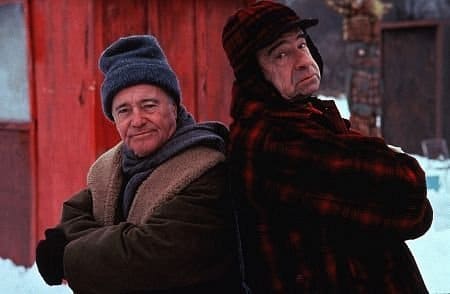
Grumpy Old Men

grumpy

There are several sub-genres within the buddy movie genre itself, including the geriatric buddy film. Grumpy Old Men is arguably the best entry in this category. Walter Matthau and Jack Lemmon team up to play two grizzled friends who love to hate each other. They fought since they were kids. You never know why, you only know they despise each other. Things only heat up when an attractive older woman (played by Ann Margaret) moves into the neighborhood. Despite their outward disgust with each other, the two men deeply care for one another. Filled with great one-liners and lots of charming old music, Grumpy Old Men makes a great movie to watch with grandpa.

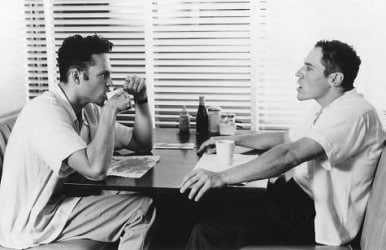
Swingers

swingers

Swingers reminds you of why it’s so important for a man to have friends. Mike (Jon Favreau) is a comedian in L.A. who has hit a real rough patch in his life. His longtime girlfriend back in Queens dumped him, he can’t land any gigs, and he hasn’t a shred of self-esteem left. Thankfully, Mike has a group of friends who rally around him and work to get him back on his feet. A svelte and young Vince Vaughn plays the fast-talking wise guy friend who peps Mike up and tries to convince him about how money he is. Mike’s friend Rob (Ron Livingston) offers more sage advice and acts as a sounding board for his downtrodden buddy. Thanks to his friends, Mike finally gets his act together and rebounds from his doldrums.

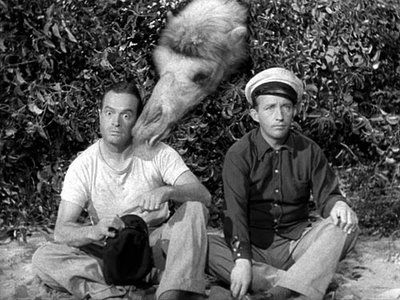
Road To Morocco

morocco

During the late 30’s and early 40’s, Bing Crosby and Bob Hope starred in a series of road movies that didn’t include much in the way of plot. I think the films were basically an excuse to get Bing Crosby to sing and Bob Hope to crack some jokes. Despite their lack of depth, the Road to… movies are a joy to watch. They’re fun, lighthearted, and don’t take themselves very seriously. Out of all the Road movies, Road to Morocco is the best. The friendship and chemistry between Crosby and Hope is legendary. Check it out.

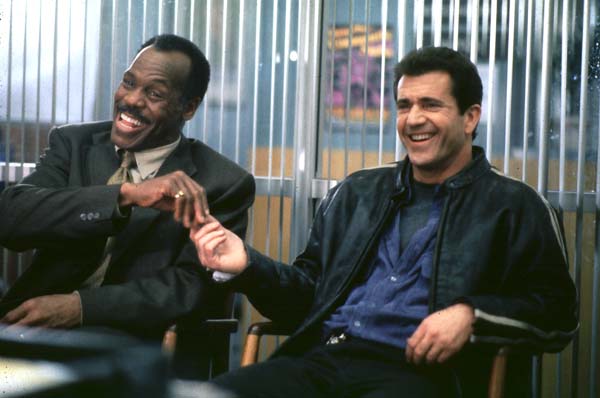
Lethal Weapon

lethal3

Lethal Weapon is a perfect example of another sub-genre of the buddy movie: the cop buddy movie. Mel Gibson plays Sergeant Martin Rigs, a loose cannon maverick cop that takes risks that verge on the suicidal. Danny Glover plays the veteran, risk averse cop. For some reason, the fates bring these two polar opposites together as partners. At first, they can’t stand each other, but as the film progresses, the two develop a bond and chemistry that’s both comedic and warming. This movie has it all- classic lines like Danny Glover’s “I’m getting too old for this sh**,” an albino villain played by Gary Busey, and of course, an example of a solid male friendship.

Butch Cassidy and the Sundance Kid

butch

Paul Newman plays Butch Cassidy, the fast talking wise guy friend. Robert Redford plays the Sundance Kid, the sort-of-serious friend. They were “outlaws with style in a class all their own.” Old Butch and Sundance did everything together: they robbed trains together, looted banks together, and ran away from Union Pacific security posse together. Heck, they even shared the same woman (we don’t recommend that-a clear violation of the man code). Yes, Butch and Sundance were like brothers. The final scene pretty much sums up the friendship between the two. I won’t spoil it for those who haven’t seen it. Rent it and watch it today with a bud

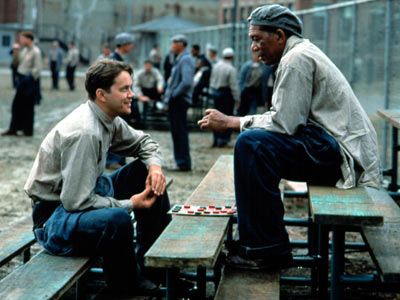
Shawshank Redemption

shawshank_l

Shawshank Redemption isn’t your typical buddy movie. While most buddy movies are comedies, the laughs in Shawshank Redemption are few and far between. Tim Robbins plays Andy Dufresne, a white banker from Maine who is wrongly convicted of murdering his wife. Morgan Freeman plays Red, a black man who’s been in jail for years for a crime he committed as a teenager. In normal life, the two probably would never have been friends, but within Shawshank’s old stonewalls, they form a friendship that will last a lifetime.
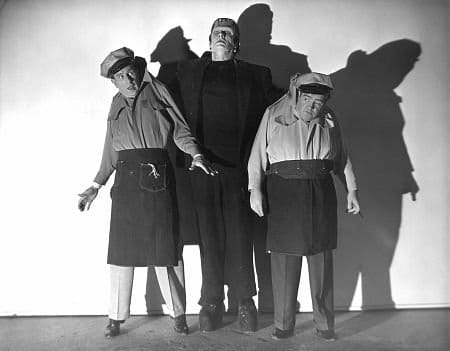
Abbot and Costello Meet Frankenstein

franken

Like Cosby and Hope, Abbot and Costello starred in a series of comedic buddy films during the 1940s. The Abbot and Costello Meet… films usually had Abbot and Costello confronting one of the monsters from Universal Studio’s classic monster films. Out of all of them, Abbot and Costello Meet Frankenstein is definitely the best. Dracula and Frankenstein end up in the United States. Dracula needs to find a new brain for Frankenstein and decides that Costello’s would be a good one. Hilarity ensues. There’s nothing really deep about the friendship between Abbot and Costello; it’s just a good reminder that a best friend can make any situation fun, even when a monster is after your brain.
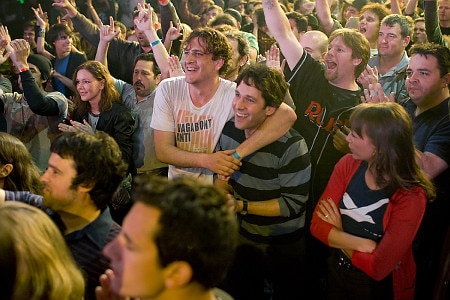
I Love You, Man

alg_love_man

Making friends is difficult for the modern man. Because of work, dating, and family commitments, guys often lose touch with their buds. In I Love You, Man, Peter Klaven (Paul Rudd) is a young real estate agent in LA who’s about to marry his dream girl. Problem is Peter doesn’t have any male friends he can ask to be his best man. But his lack of a best man is the least of his problems. With no other males in his life, Peter has lost touch with his manliness. All that changes when he meets Sydney Fife (Jason Segel). Sydney is honest, comfortable in his own skin, and relishes being a man. Sure, Sydney’s conception of manliness is a little oafish, but it’s exactly what Peter needs to shake of the wussification that has held him bound and reconnect with his masculinity. This movie is crammed with laugh out loud moments, lots of memorable quotes, and dialogue and situations that really ring true. Slapping the bass!

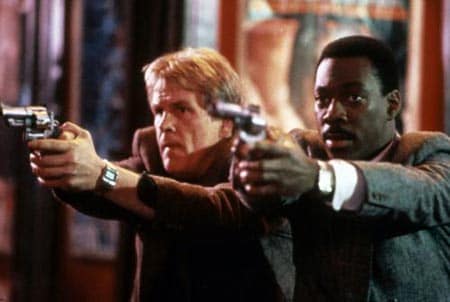
48 Hours

48_hrs

Cue the awesome synth music. 48 Hours inspired the cop buddy movies of the 80’s and early 90’s (see Lethal Weapon). Funny thing is, only one of the lead characters was actually a cop. Nick Nolte plays Jack Cates, a gruff, chain-smoking, by the book cop who’s out for revenge after a notorious murderer kills several of his comrades. To help him track down the murderer, Cates enlists the help of a fast-talking con-man named Reggie Hammond (Eddie Murphy). The mismatch, like in every other cop buddy movie, creates a comedic gold mine.

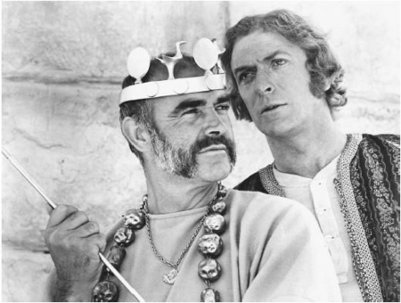
The Man Who Would Be King

man_who_would_be_king

This buddy movie has two things going for it from the get go. First, it’s based off a short story by Rudyard Kipling. And second, the two leading men are Sean Connery and Michael Cane, two bad ass actors in their prime. The story follows two British soldiers who decide to leave the army and become kings of a remote place in India that no white man has set foot in since Alexander the Great. They decide it would be easier to subdue the village if they convince the villagers that one of them is a god. Daniel (Sean Connery) takes on the god role, but the power quickly goes to his head and causes the ruin of him and his friend. The ending of the film is amazing and captures what friendship is all about: unwavering loyalty.

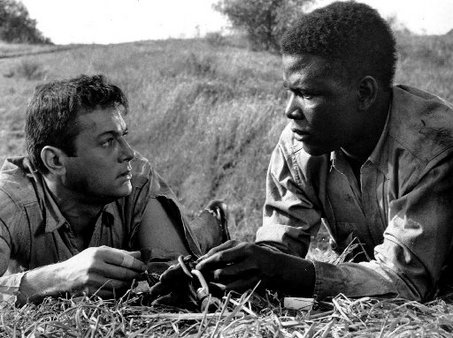
The Defiant Ones

large_defiant

Two inmates get an unexpected shot at escape. But alas, they’re chained together. Oh, and one of them is black (Sidney Poitier) and one’s white (Tony Curtis). And it’s the late 1950s. Can somebody say “racial tension?” During the course of the movie, the two men are able to put aside their differences and work together to become free. They even become buddies by the end. At its core, The Defiant Ones is about the ability of a man’s heart to change and the loyalty among men when faced with dire circumstances.

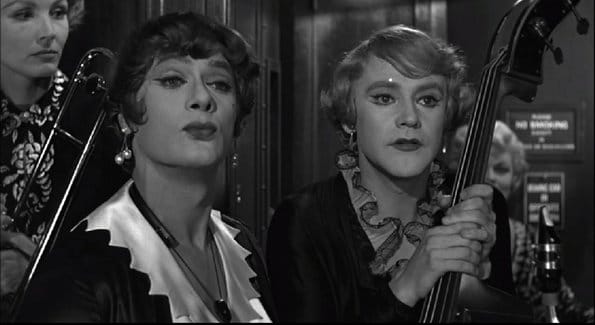
Some Like It Hot

hot

Don’t adjust your sets-that ain’t a couple of broads

Two out of work musicians witness the St. Valentine’s Day Massacre and have to flee for their lives from the mobsters who want them silenced. They don’t have the money to make it to Florida, so they do what any desperate man on the lam would: put on a dress and high heels and join an all woman’s orchestra. Jack Lemmon plays Jerry (aka Daphne) and Tony Curtis stars as Joe (aka Josephine). Of course with two red blooded American men disguised as women in an all women’s review, there’s bound to be some serious sexual tension going on, especially when one of the members of the group happens to be Marilyn Monroe. Zoinks! Some argue that Some Like It Hot is cinema’s greatest comedy. Whether the movie is worthy of such a title or not, it’s certainly a great buddy film.

The Odd Couple

Odd-Couple-Lemmon_l,jpg

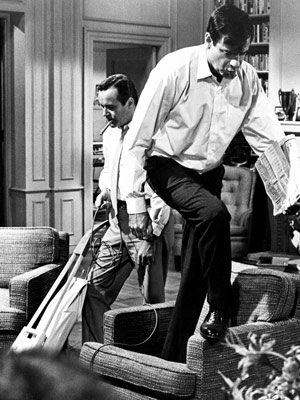
Why is that sometimes the person who irritates us the most ends up becoming our best friend? Well, that irony is at the heart of The Odd Couple. Felix Unger’s (Jack Lemmon) wife leaves him, so he goes to live with his long time buddy, Oscar Madison (Walter Matthau). But tension sets in as the two quickly discover their opposite personalities clash like polka dots and stripes. Felix is an uptight neat freak who’s always cleaning. Oscar is a grumpy slob who revels in his filth. You can see where this is going. The chemistry between Lemmon and Matthau is fantastic; the dialogue is hilarious. See the Grumpy Old Men before they were just plain grumpy.

Silver Streak

silver_streak_1976_685x385

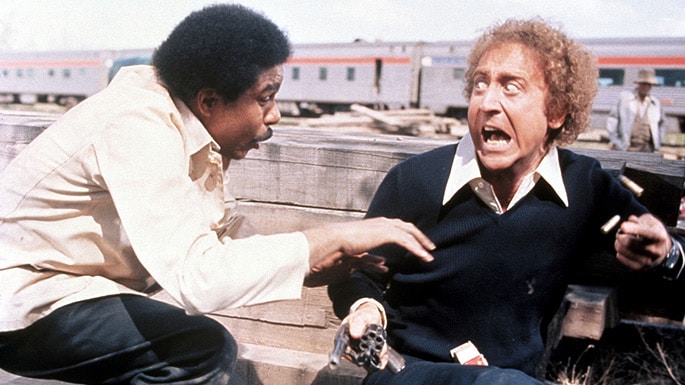
While on a cross-country train ride, George Caldwell (Gene Wilder) finds himself accused of a crime he didn’t commit. With the help of a thief (Richard Pryor), George sets out to clear his name and save the girl of his dreams from the villain who actually committed the crime. Wilder and Pryor are hilarious together. Of course when you have a white guy and black guy teaming up together in the 1970s, racism will be a subject of the film. But Silver Streak uses comedy to show the audience how stupid racial stereotypes and bigotry is. The most memorable scene in the movie has to be when Pryor tries to teach Wilder how to “walk black.” Of course, Wilder ends up looking like a goofy white guy trying to be hip, resulting in comedic gold.

The Sting

sting

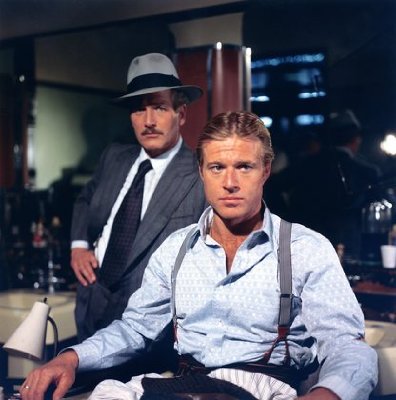
A classic caper movie set in 1936 Chicago. Two Chicago con artists (Newman and Redford) set out to avenge the murder of a mutual friend, only to find themselves in a high-stakes game against the master of all cheating mobsters (Robert Shaw). The rapport between Newman and Redford in The Sting is similar to the one they had in Butch Cassidy: easy-going, light-hearted, but fiercely loyal.

Know of any other good buddy movies that didn’t make our list? Share them with us in the comments!

Saturday, August 15, 2009

Home


In 4 months I'll be 50. But today I decided to do a little reflection on (nearly) 50 years of living.

First of all I have friends both younger and older than me. As we get older, age isn't as important as it was when we were under 21.

Speaking of 21, last night my wife Kathy and I took my step-daughter Abby to Henry's, a local bar and restaurant in Fort Wayne for the first time.

Abby turned 21 two weeks ago but she was out of town, and the past week has been the one week that she has been home between her summer internship and returning to college, which she did this morning.

What and where is this place we call home?

Is it a house, a town, does it change, are you sad when you leave it or excited to start fresh?

Home for me for the first 18 years was where my parents lived. For 10 of those years it was the house in the picture.

As long as my parents lived in that house, it was a "home" to me.

In 2001 we sold that house and if you drive by today, instead of green, it is yellow, which ironically is one of my favorite colors.

I returned to that home in 1998 but it wasn't until I met my wife Kathy that I decided to make Fort Wayne my "home" again.

My three kids, Rachael, Josh & Tiffany were still in high school about 50 miles west of here and I expected them to go out in the world and explore the way I did.

All three of them went to college after high school and Josh just got his degree a couple months ago. My goal as their Dad was to help them become self reliant, responsible young adults who would chase their dreams, where ever it took them.

At the moment, Tiffany, the youngest at 23 has been married 2 years and moved to Oregon last year with her husband Jon but now they are back in Indiana, about 100 miles away and doing fine.

Her older sister Rachael is 25 until next month, and lives and works here in Fort Wayne. We ran into Rachael and her boyfriend Brandon last night at Henry's.

Josh is in Arkansas this weekend attending a wedding with his girlfriend Madeline. Next weekend we will see her in a play she is acting in about 60 miles from here.

I wonder at times what place my kids think of when they think of "home". I have lived with Abby and her mom, my wife Kathy for 8 1/2 years, yet out of respect for her relationship with her Dad, she calls me Scott which is fine.

We are content with where we live. We like Fort Wayne. I have lived other places and the house we now call home is just a couple miles from the house in the picture I grew up in. I have learned to take it all in and not get too attached to "things", instead attach yourself to people.

So the answer to my original question, Where is home?, is where the people and relationships are.

How about you?